
Overtime series, 2018-2021
Read Lesley Martin’s take on Overtime on Aperture’s website, where the project was shortlisted for a portfolio prize in 2022.
Read Margo Ovcharenko’s interview conducted by Yana Nosenko on LensCulture. It was published in January 2026 as part of the online exhibitions presented by the Griffin Museum of Photography.
Read Loring Knoblauch’s review of the photobook Overtime on Collector’s Daily, published in June 2026.
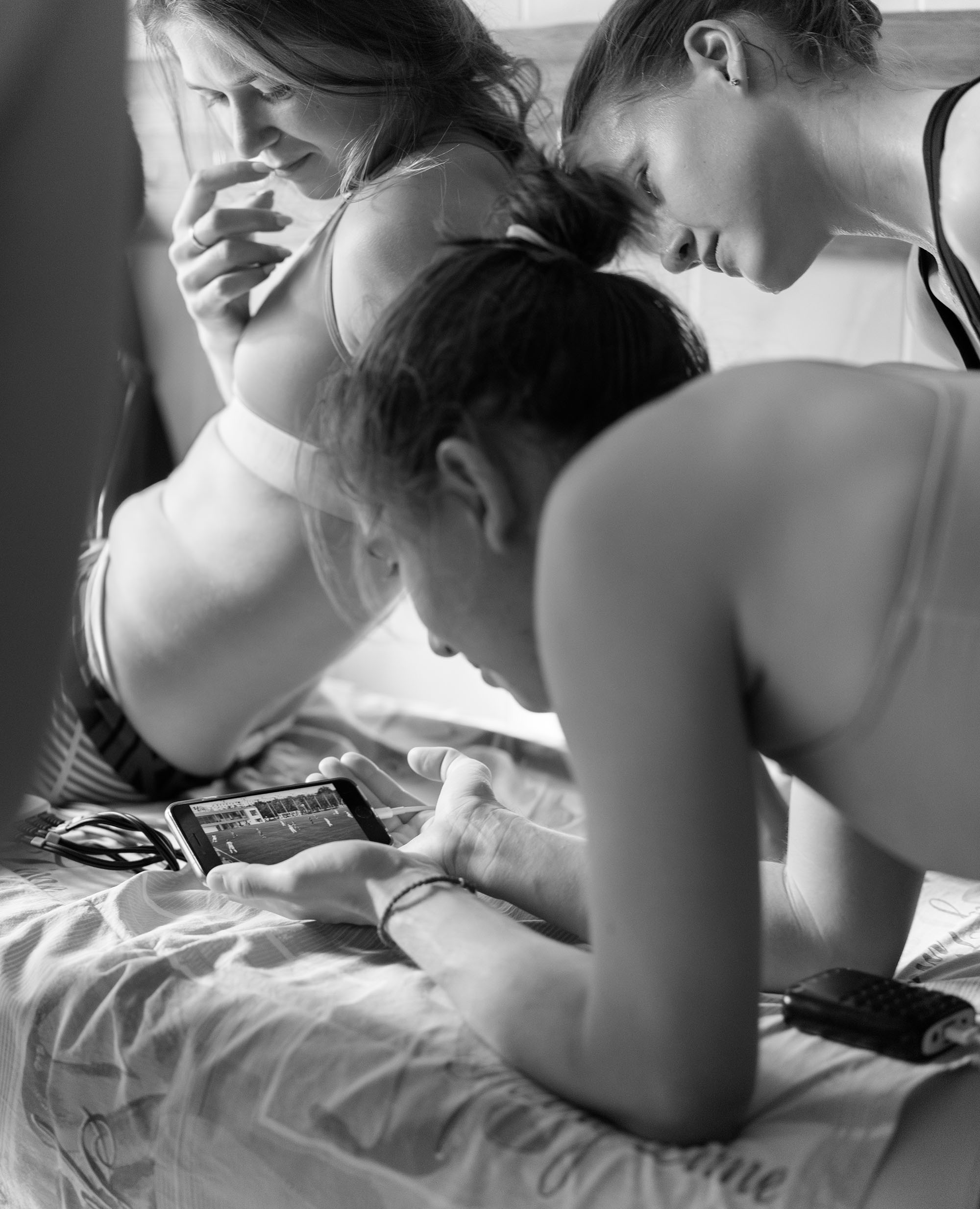
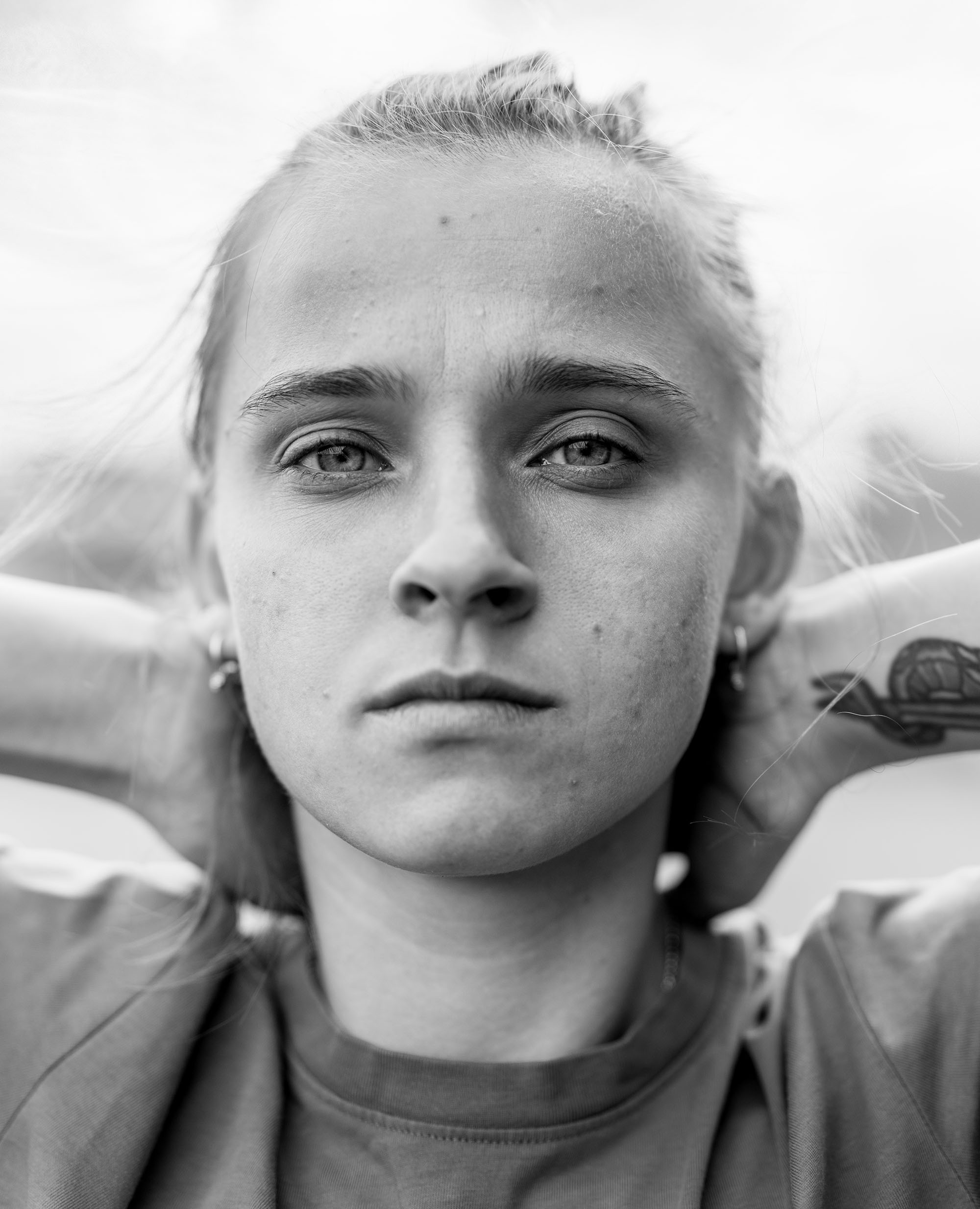
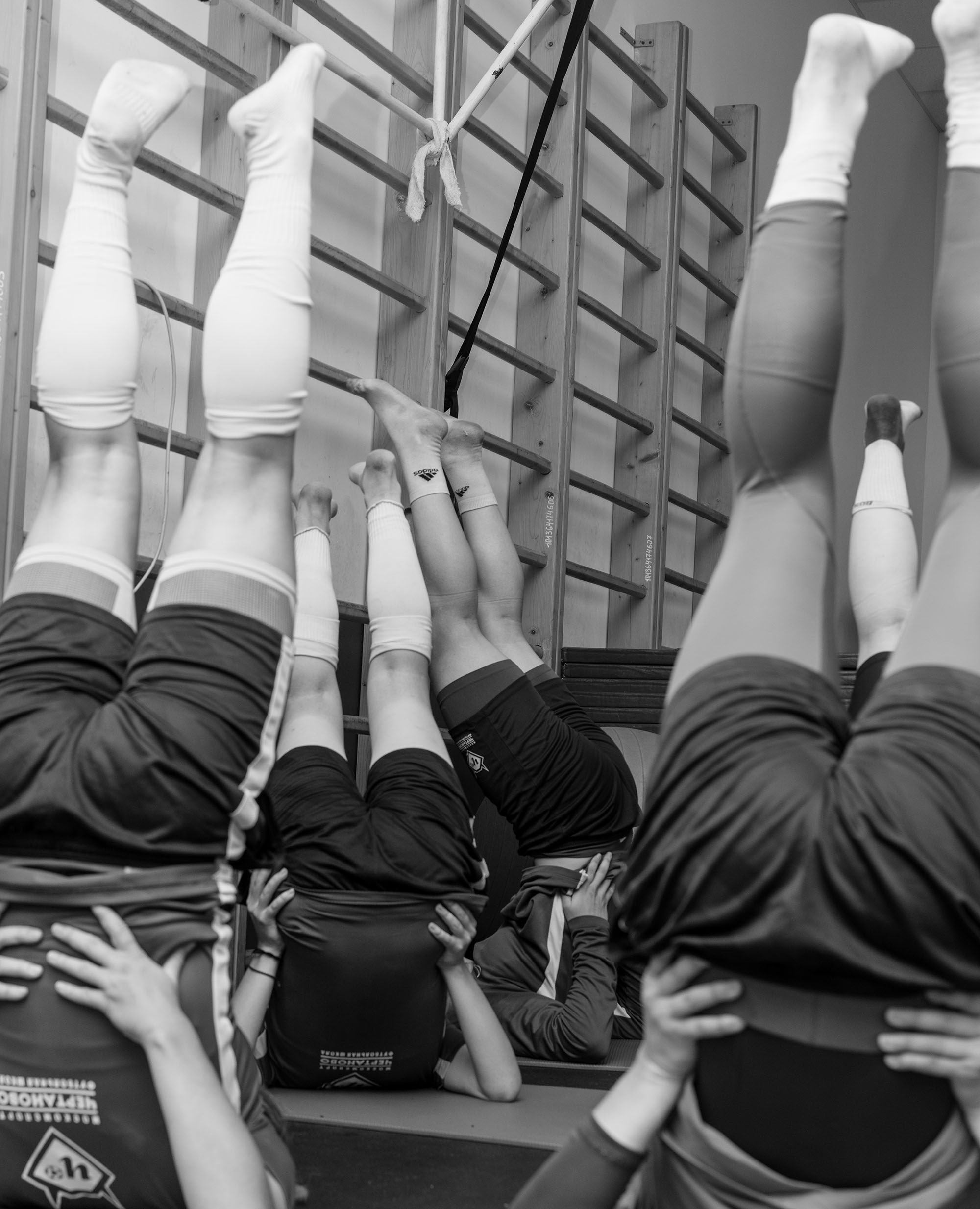
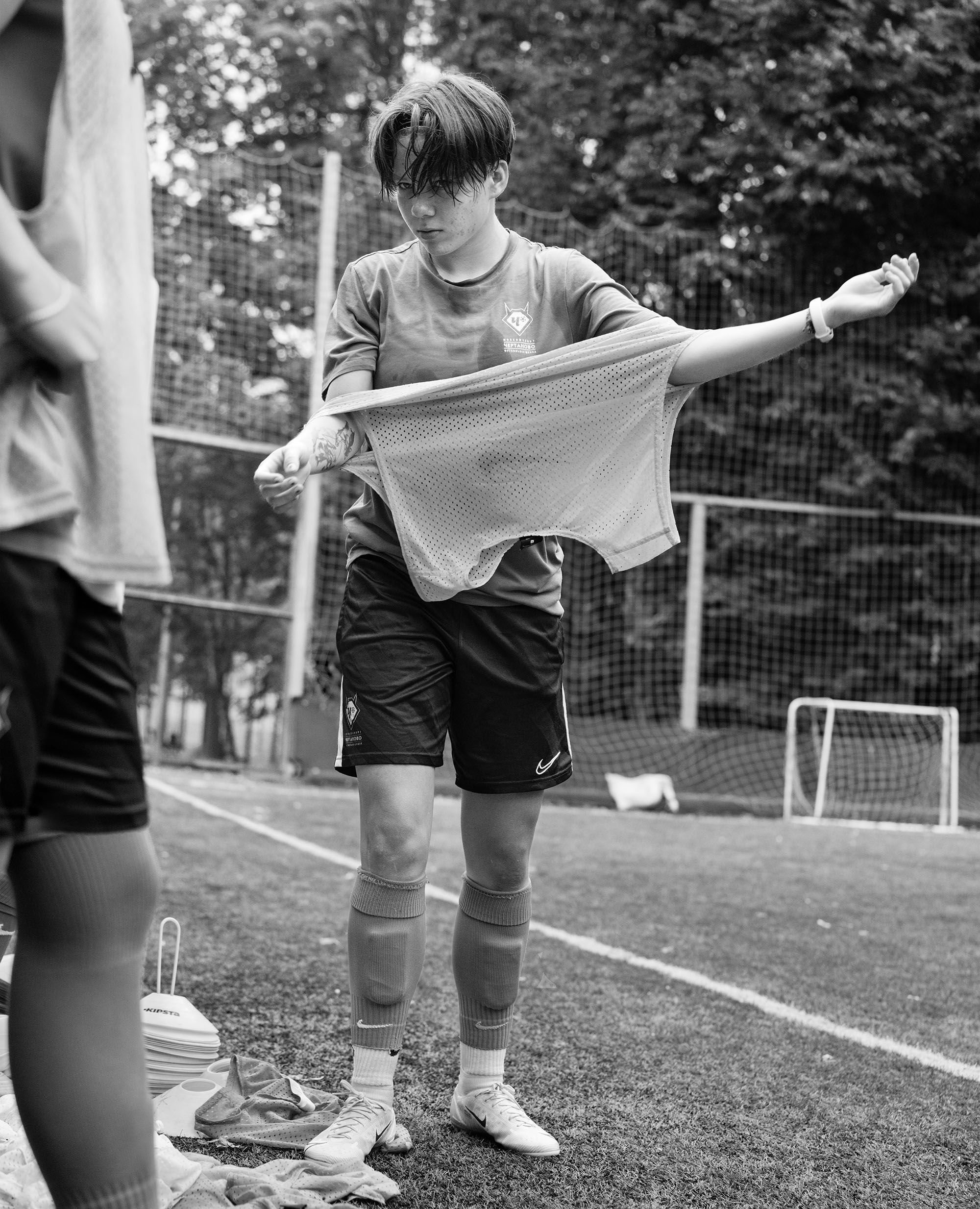
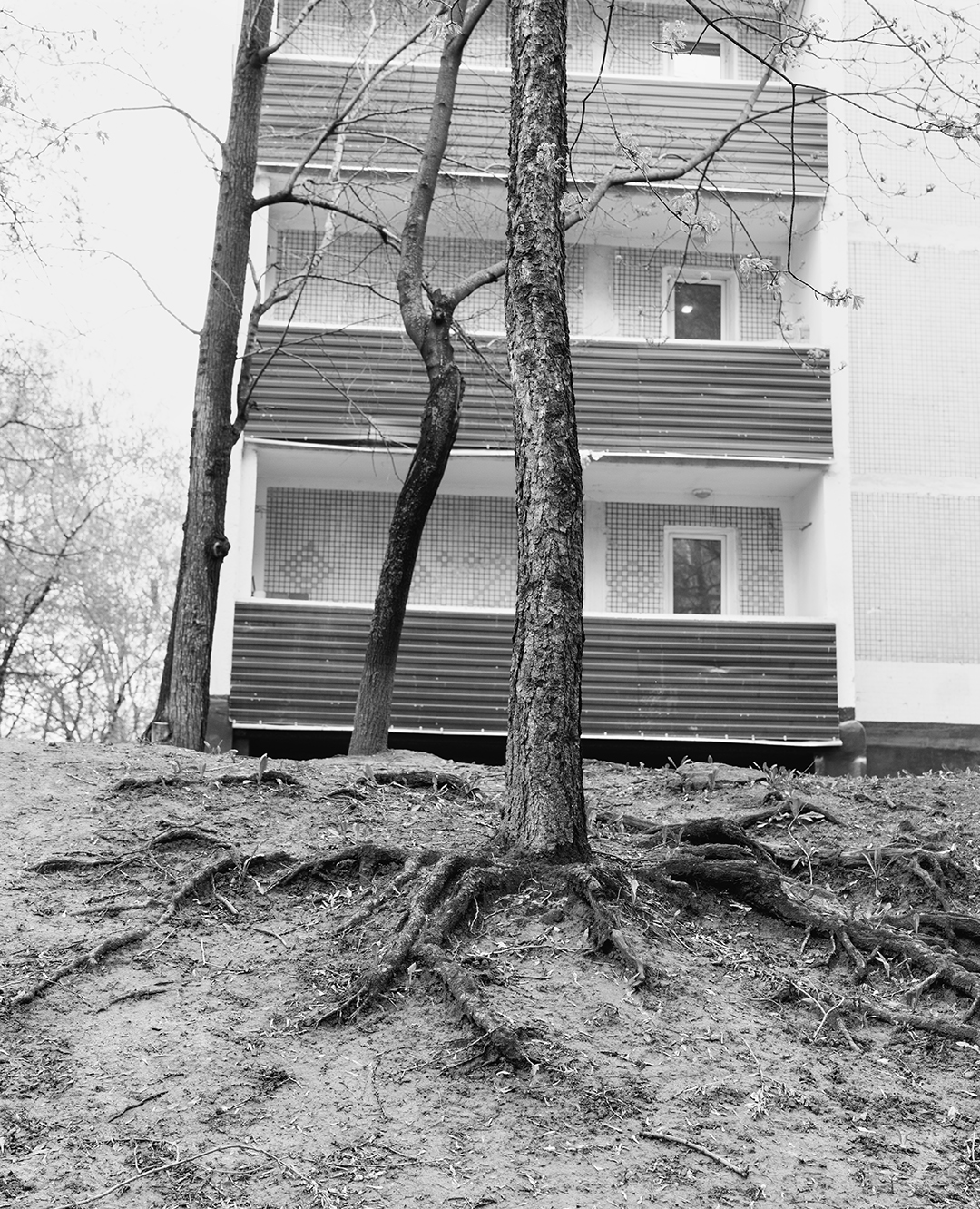
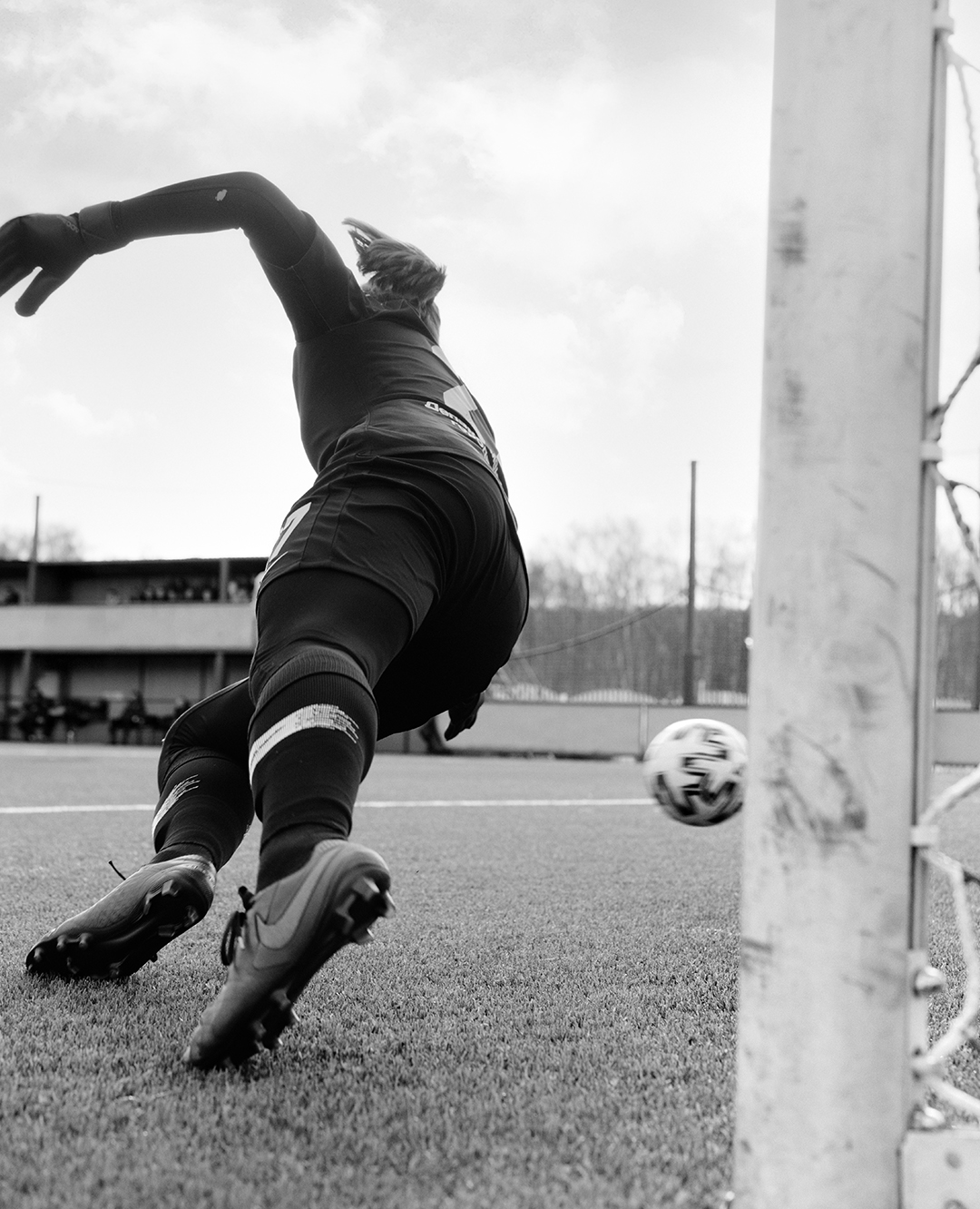
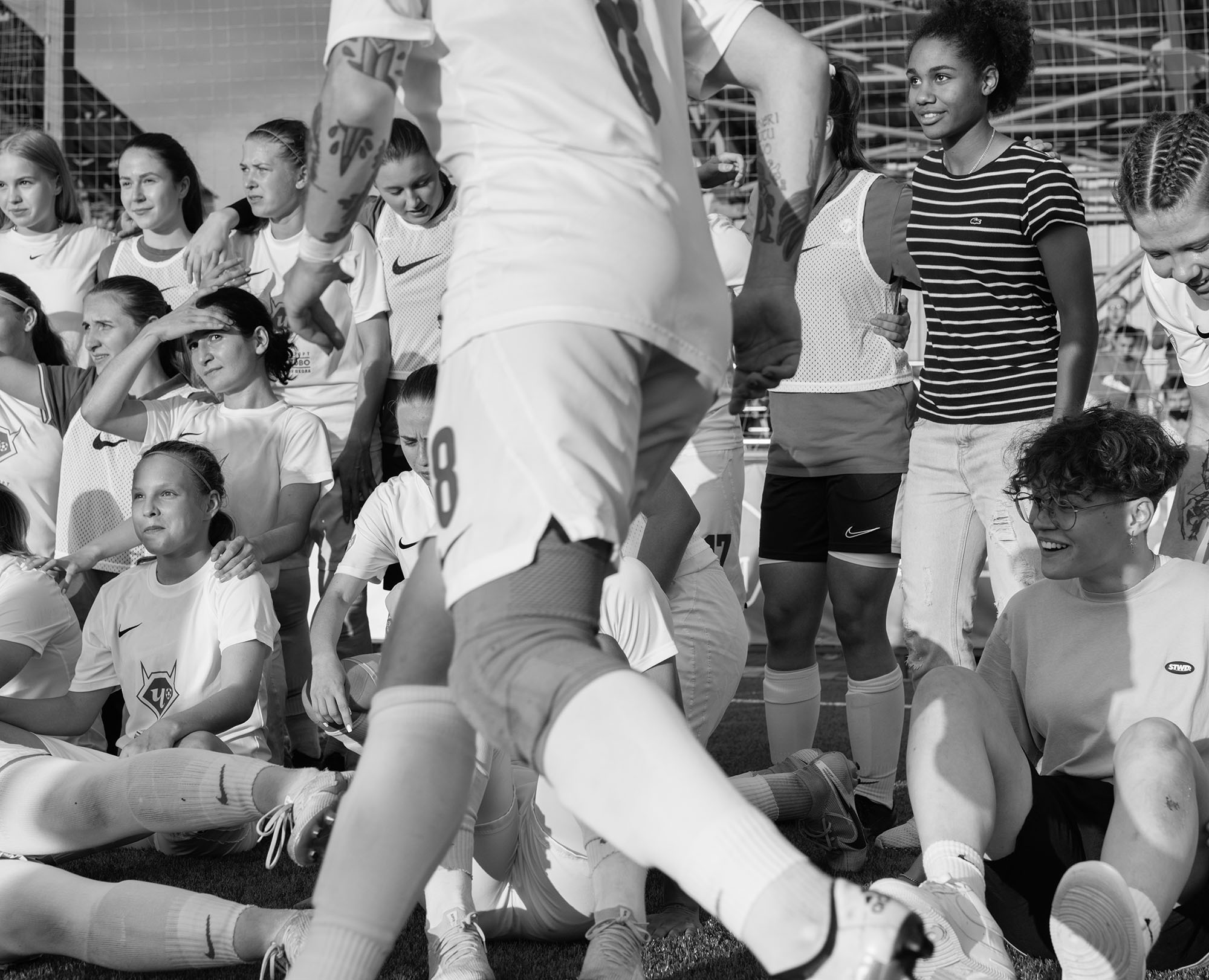
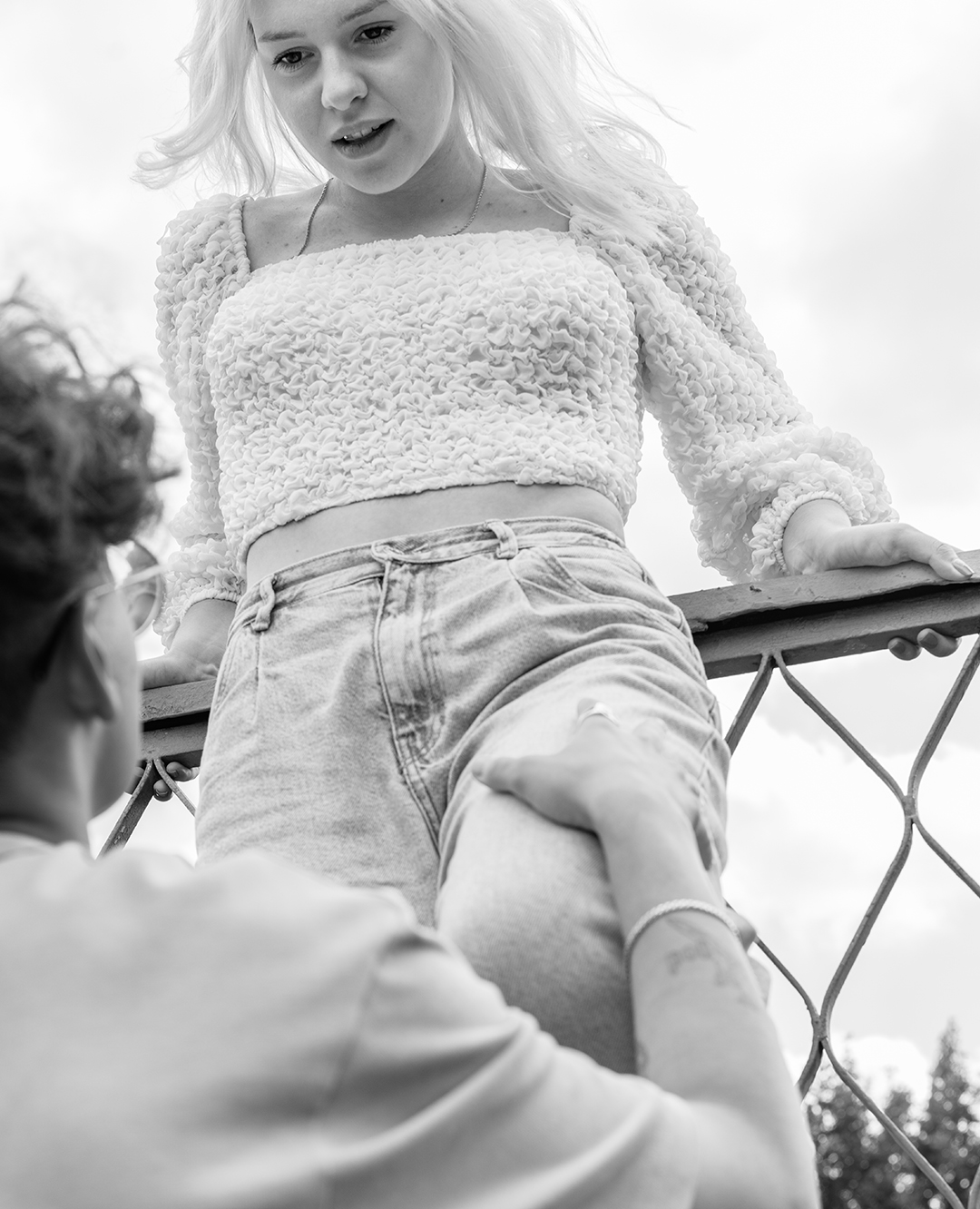
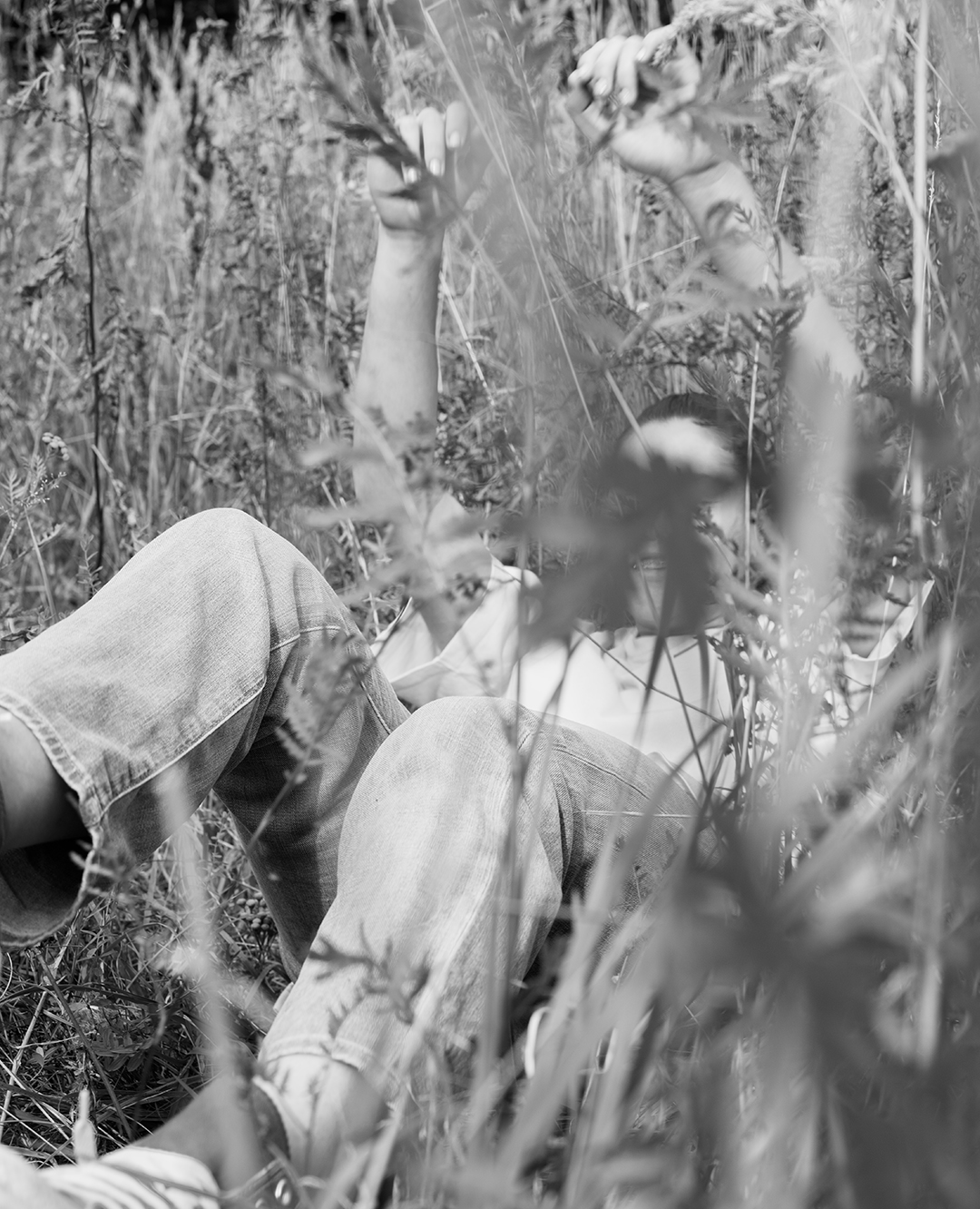
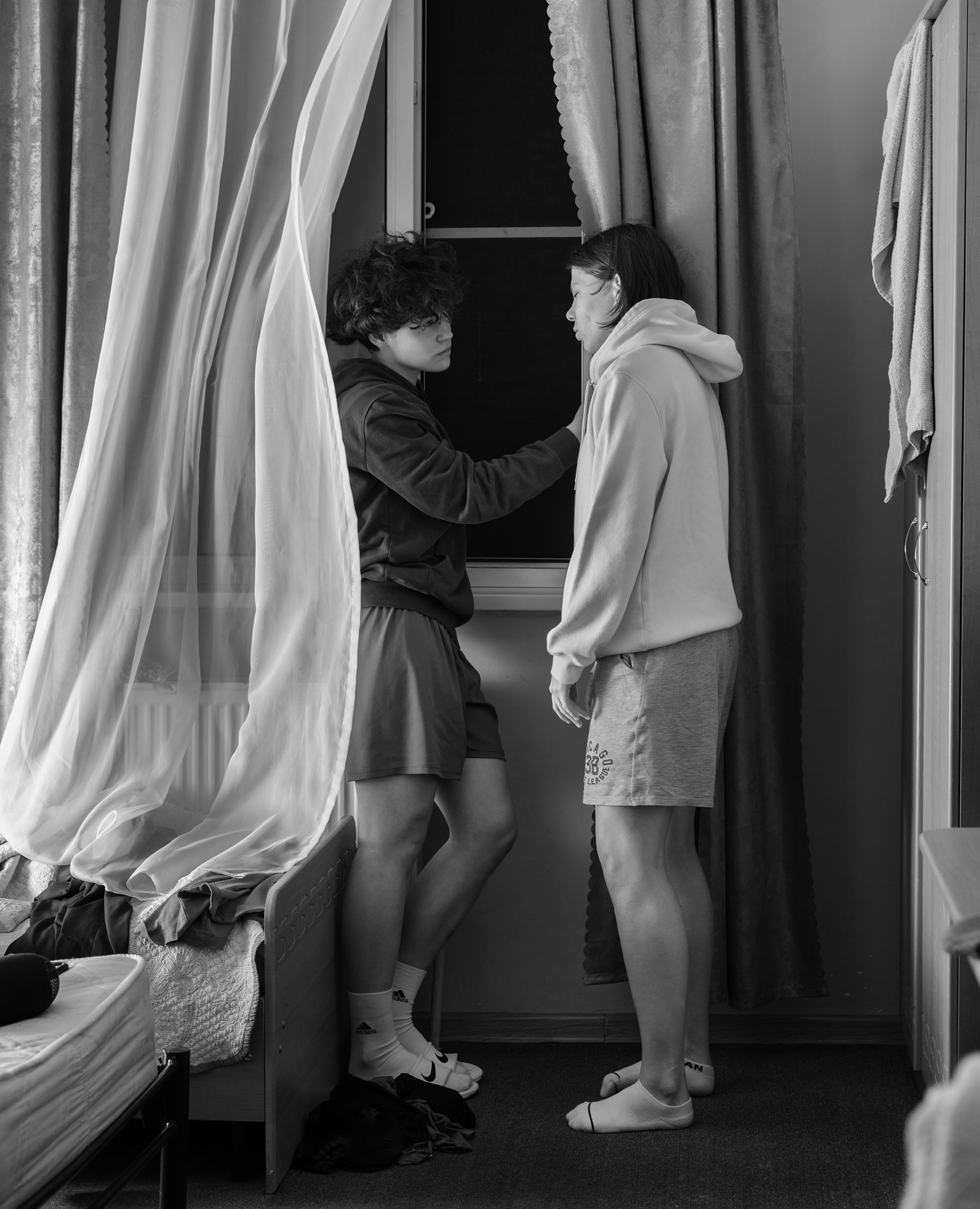
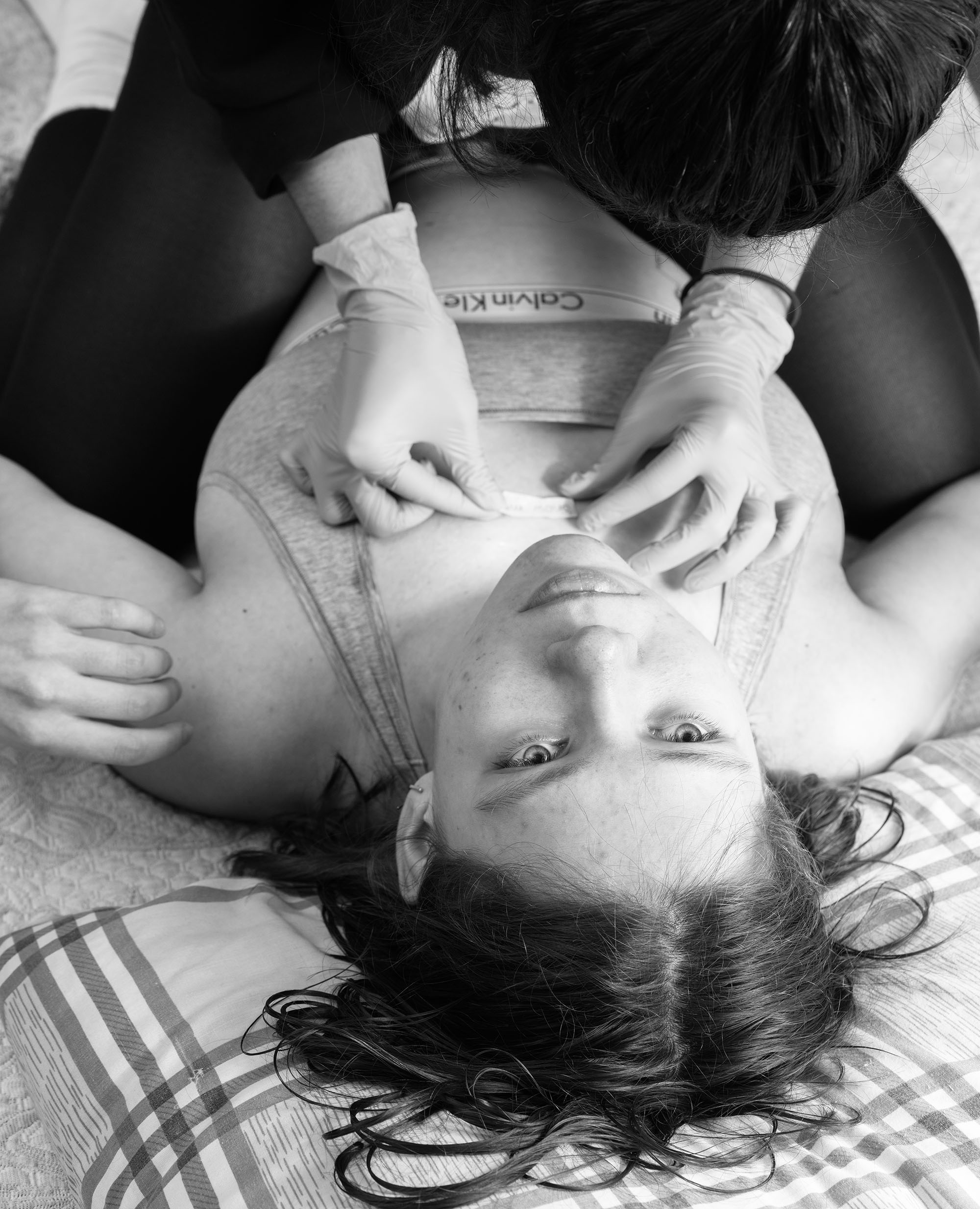
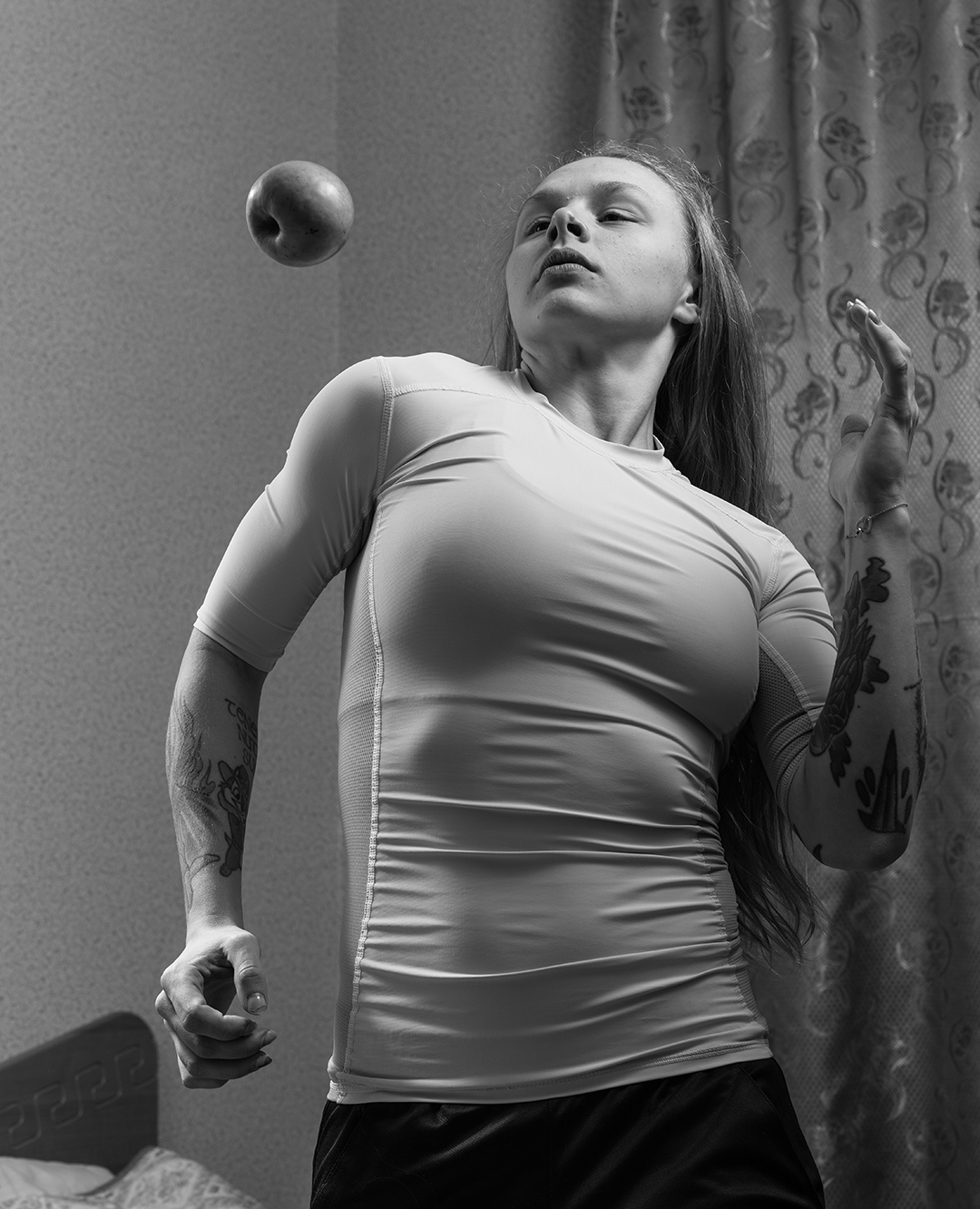
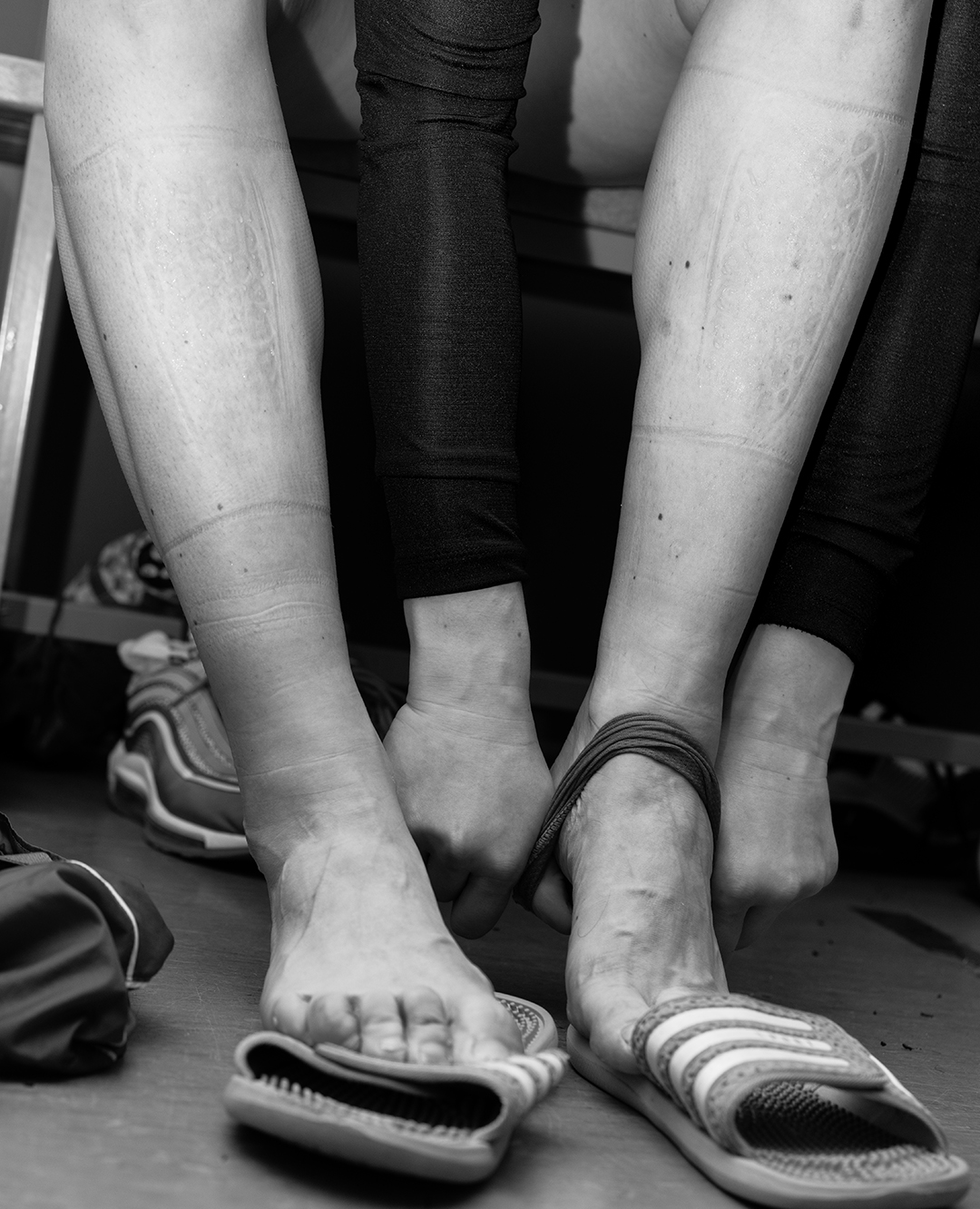
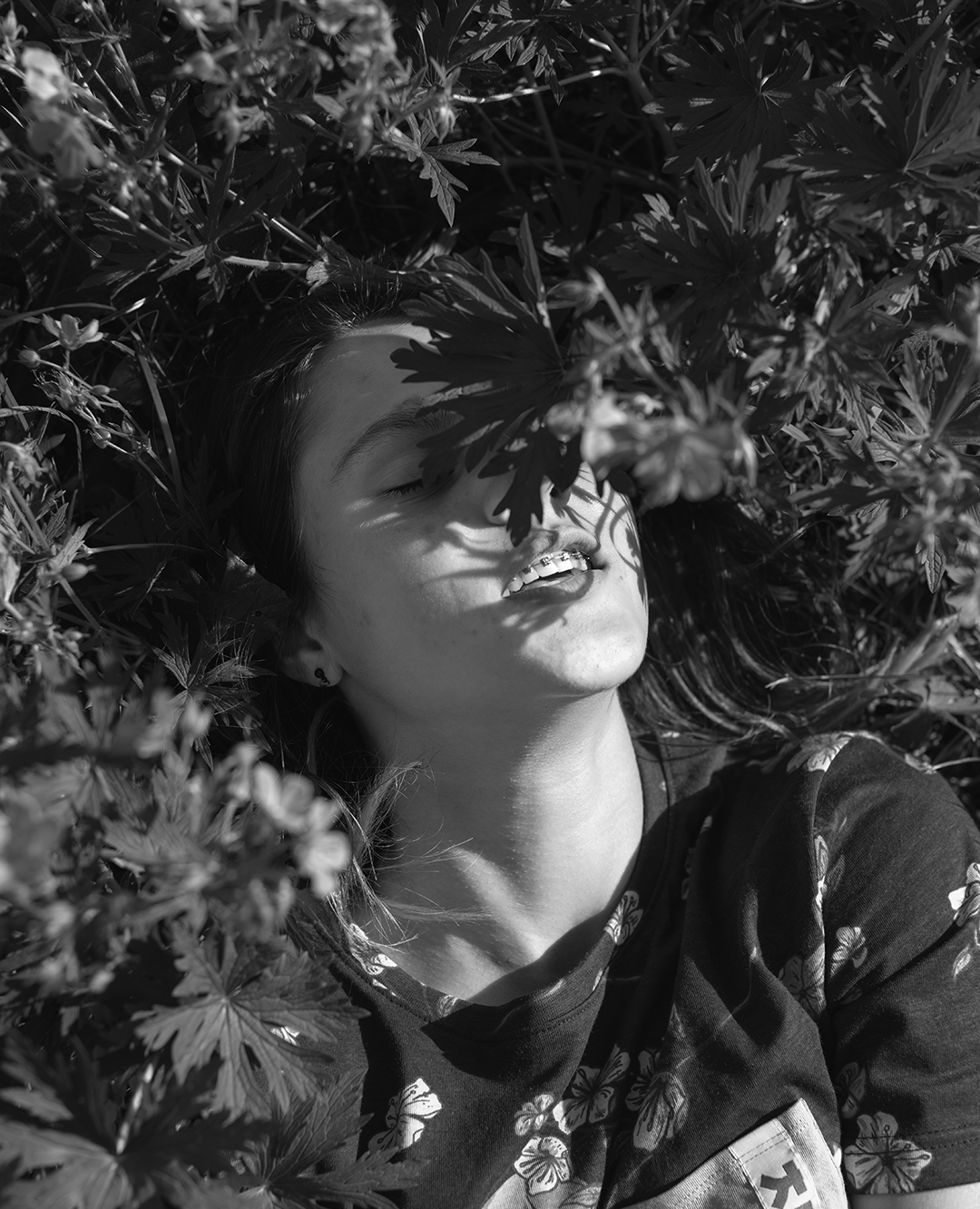
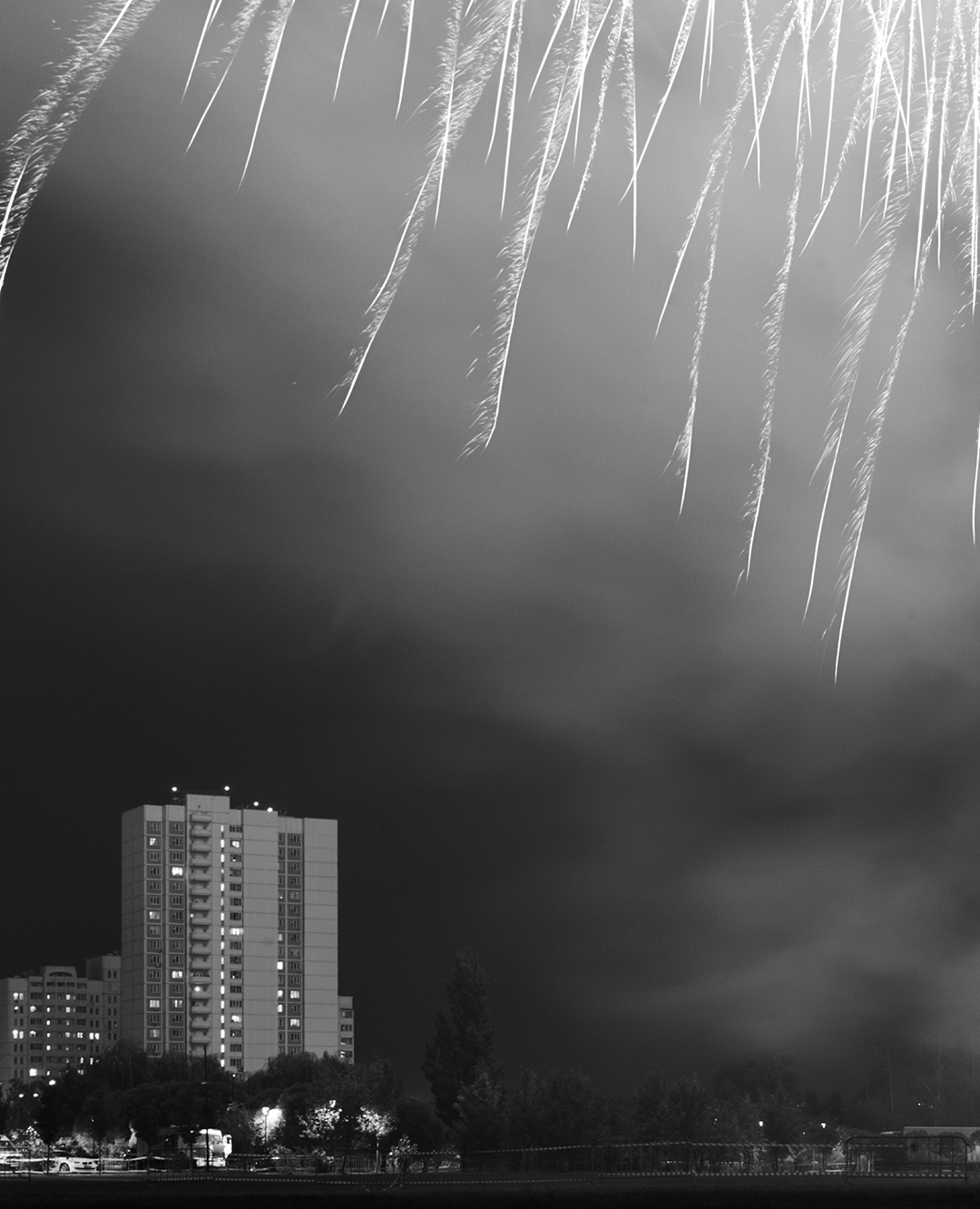
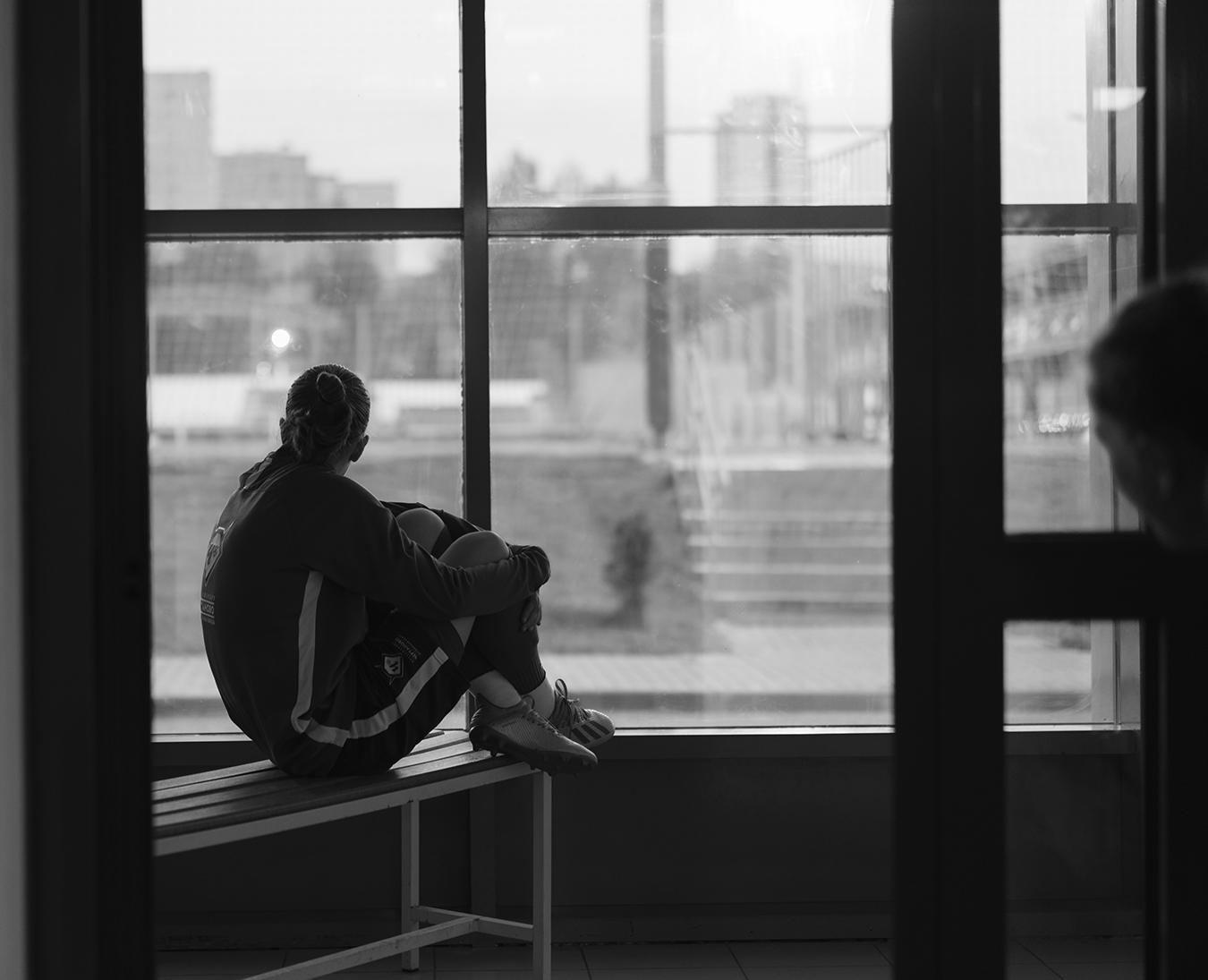
Overtime is a series that focuses on a football boarding school and its professional women’s team on the outskirts of Moscow. It witnesses how queer teenagers come of age within systems of discipline, belonging, and visibility.
My interest in the football environment grew out of experiences I share with the players: early involvement in sport—rhythmic gymnastics in my case—and the process of recognizing and negotiating one’s queerness. The photobook attends to the strategies of survival and moments of refuge that emerge through the game itself and through collective participation.
Off camera lies the political context in which the team represents the values of a society that denies queer identities legal recognition, criminalizes public visibility, and forces ongoing self-regulation as a condition of safety.
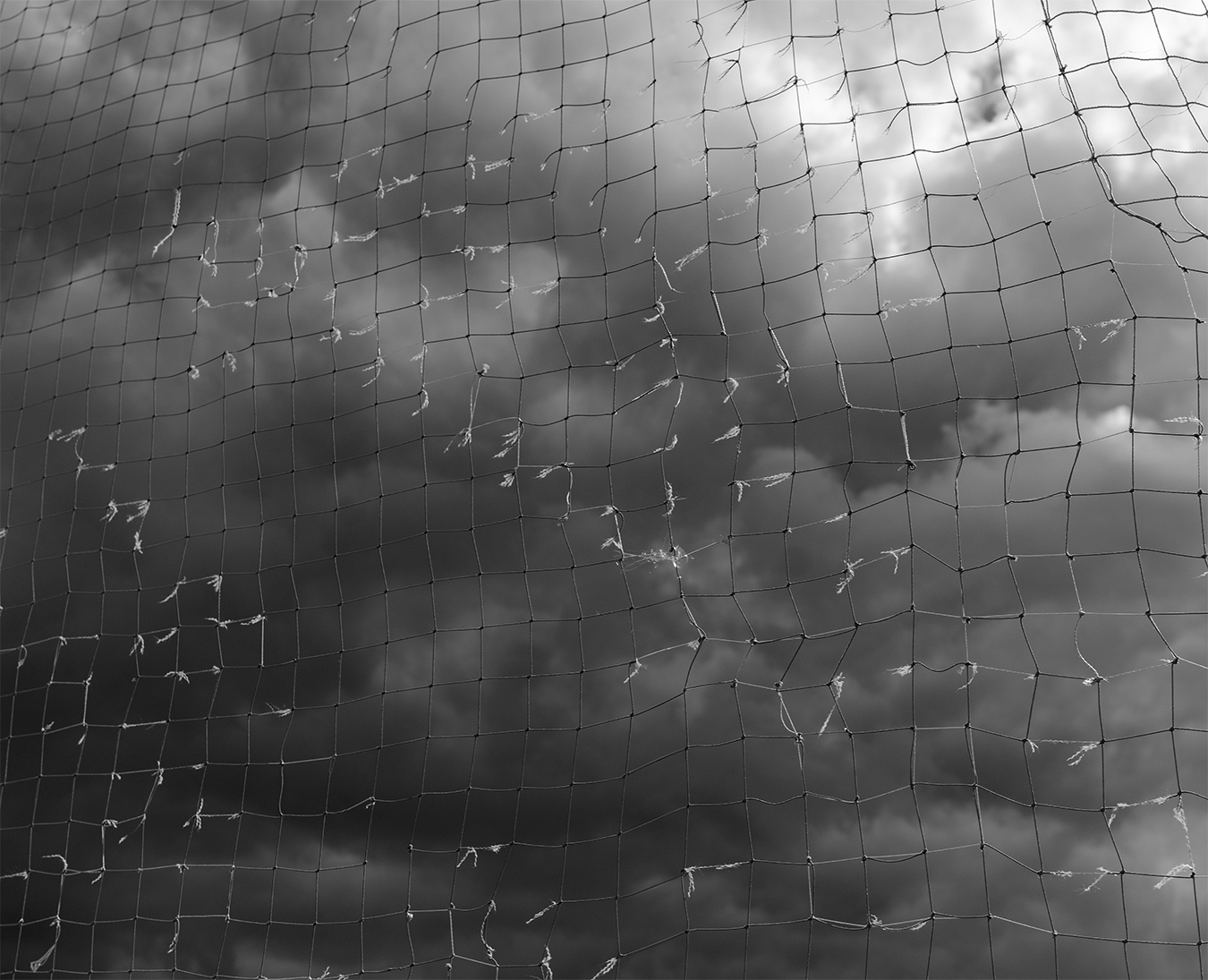
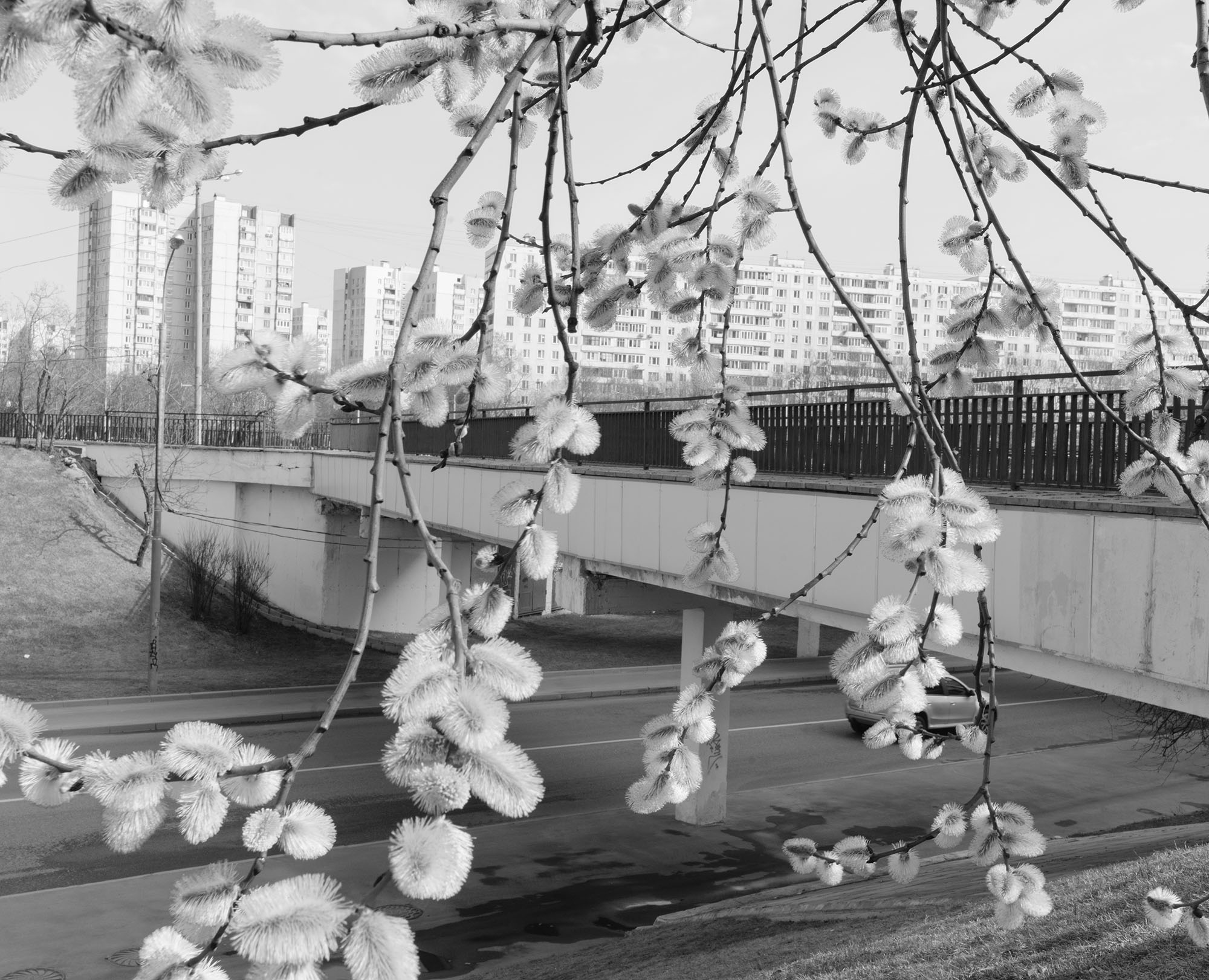
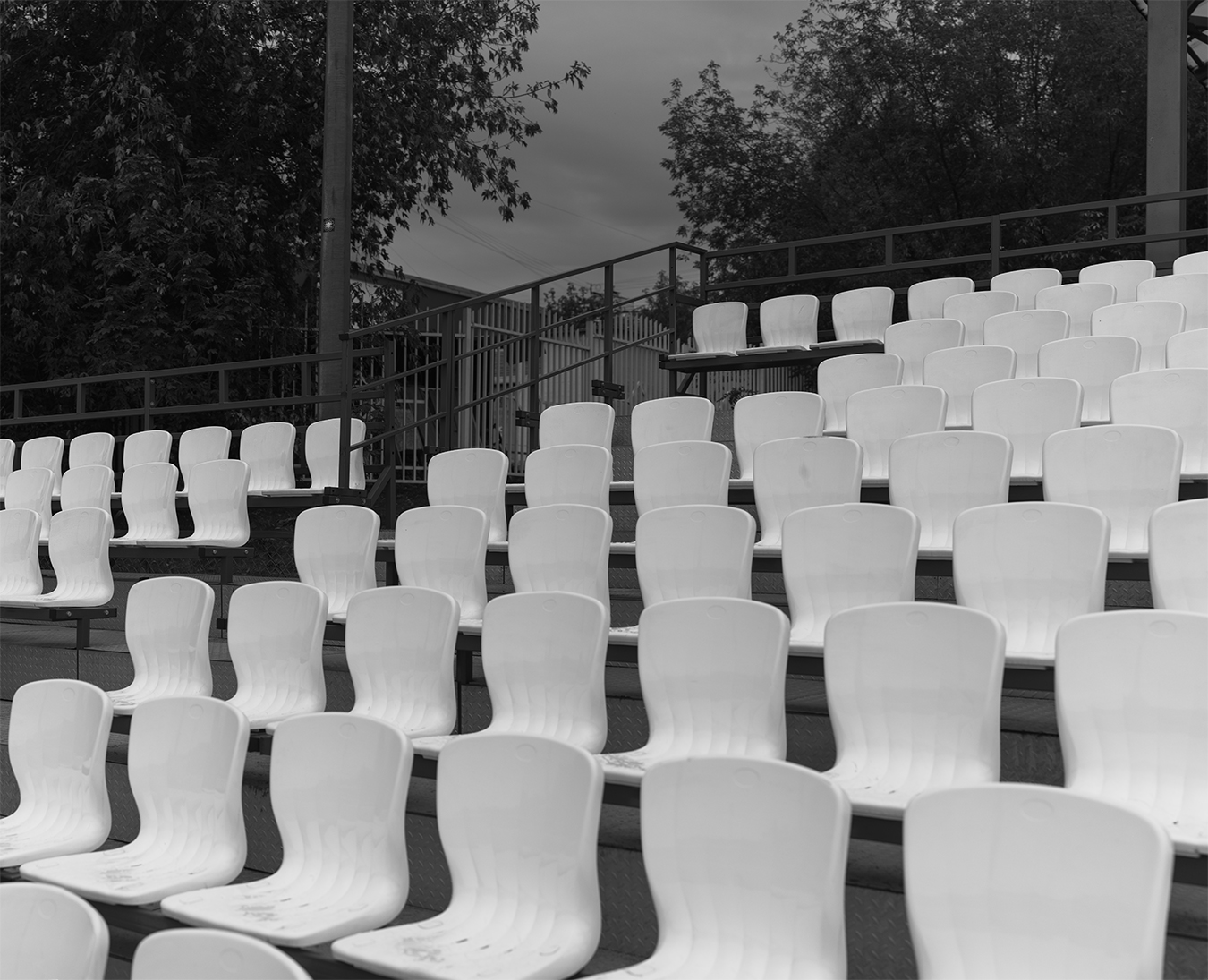
The photographs were made over four football seasons and trace the everyday life of the community: on the field, in the locker room and at the informal gatherings. The images are a visceral testament to the temporary nature of physical states—fatigue, injury, recovery, moments of strength—that athletes experience with particular intensity. The players are surrounded by a working-class suburb where vegetation pushes through concrete and prefabricated housing blocks, fruit ripens quickly, and summers are brief. These images outline a social landscape of growing up—proletarian and suffocatingly heteronormative. This landscape functions as an active force within the project, permitting the protagonists’ presence only within narrowly defined zones: on the field, in the locker room, inside the team.
Within these boundaries, photography becomes a tool of visual validation and self-presentation. For the players, being photographed is part of shaping a shared visibility and affirming their position as athletes; for me, it is a way of registering a community whose public queer visibility is legally restricted and socially policed in contemporary Russia.
The football world remains a bubble, while changing cultural norms and ideology are gradually squeezing the oxygen out of other spaces. Inside the bubble, rules of close-knit solidarity apply, but outside it, the same bodies and gestures instantly become vulnerable and require camouflage. The viewer observes how female footballers adopt a collective identity: they get tattoos, wear sports brands and, instead of being labelled as pro-Western teenagers or feminists, become visible primarily as athletes.
Overtime speaks of a desire to belong, to love, and to be loved. The book constructs a reality shaped by a specific historical and professional context, in which intimacy, growth, and care unfold within a limited season. The final section of the series links bodily injuries and emotional experience to the recurring motif of apples—introduced as signs of ripening and abundance and culminating in the image of apples discarded on the roadside.
My interest in the football environment grew out of experiences I share with the players: early involvement in sport—rhythmic gymnastics in my case—and the process of recognizing and negotiating one’s queerness. The photobook attends to the strategies of survival and moments of refuge that emerge through the game itself and through collective participation.
Off camera lies the political context in which the team represents the values of a society that denies queer identities legal recognition, criminalizes public visibility, and forces ongoing self-regulation as a condition of safety.
The photographs were made over four football seasons and trace the everyday life of the community: on the field, in the locker room and at the informal gatherings. The images are a visceral testament to the temporary nature of physical states—fatigue, injury, recovery, moments of strength—that athletes experience with particular intensity. The players are surrounded by a working-class suburb where vegetation pushes through concrete and prefabricated housing blocks, fruit ripens quickly, and summers are brief. These images outline a social landscape of growing up—proletarian and suffocatingly heteronormative. This landscape functions as an active force within the project, permitting the protagonists’ presence only within narrowly defined zones: on the field, in the locker room, inside the team.
Within these boundaries, photography becomes a tool of visual validation and self-presentation. For the players, being photographed is part of shaping a shared visibility and affirming their position as athletes; for me, it is a way of registering a community whose public queer visibility is legally restricted and socially policed in contemporary Russia.
The football world remains a bubble, while changing cultural norms and ideology are gradually squeezing the oxygen out of other spaces. Inside the bubble, rules of close-knit solidarity apply, but outside it, the same bodies and gestures instantly become vulnerable and require camouflage. The viewer observes how female footballers adopt a collective identity: they get tattoos, wear sports brands and, instead of being labelled as pro-Western teenagers or feminists, become visible primarily as athletes.
Overtime speaks of a desire to belong, to love, and to be loved. The book constructs a reality shaped by a specific historical and professional context, in which intimacy, growth, and care unfold within a limited season. The final section of the series links bodily injuries and emotional experience to the recurring motif of apples—introduced as signs of ripening and abundance and culminating in the image of apples discarded on the roadside.







With Feathers, 2022- ongoing
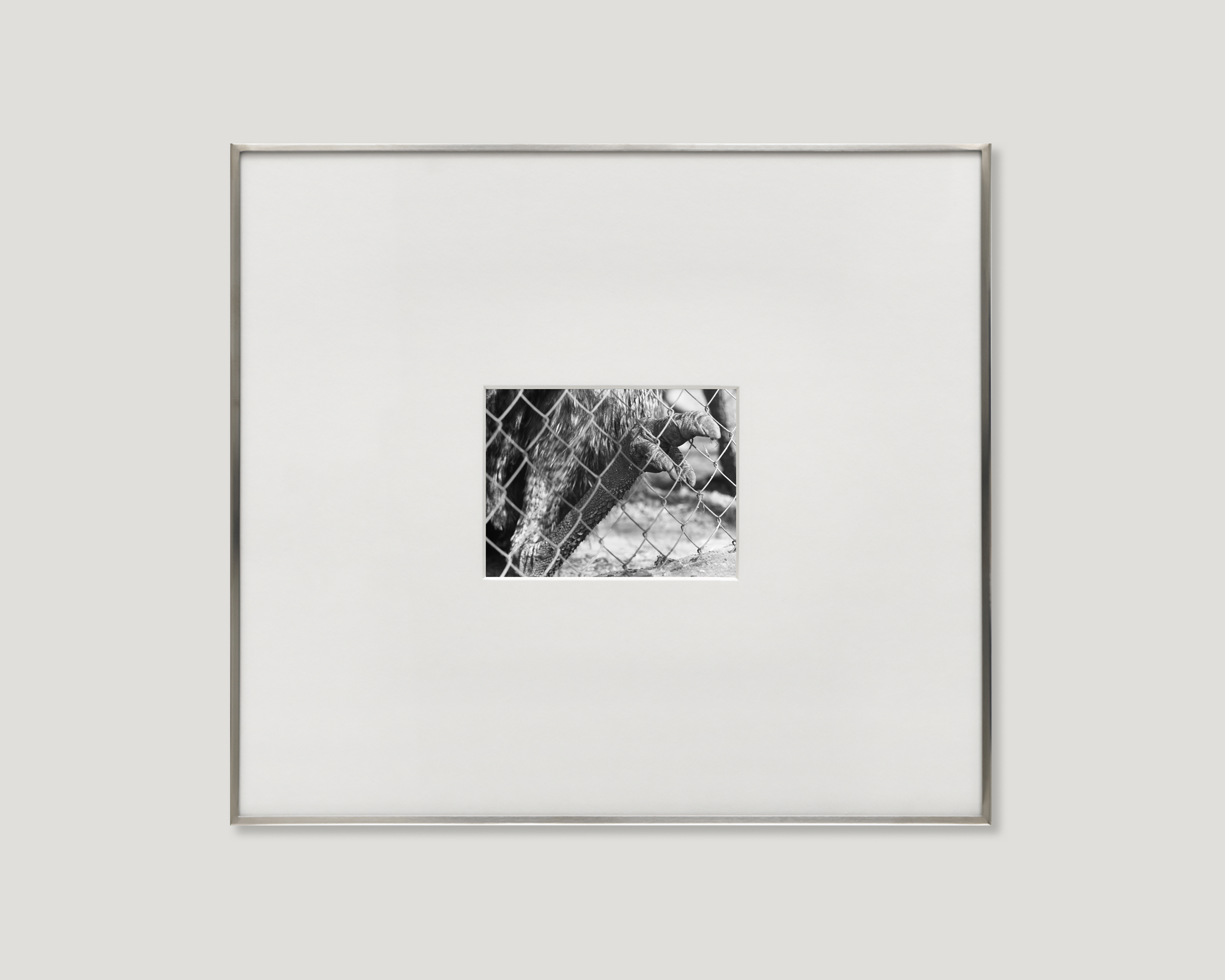
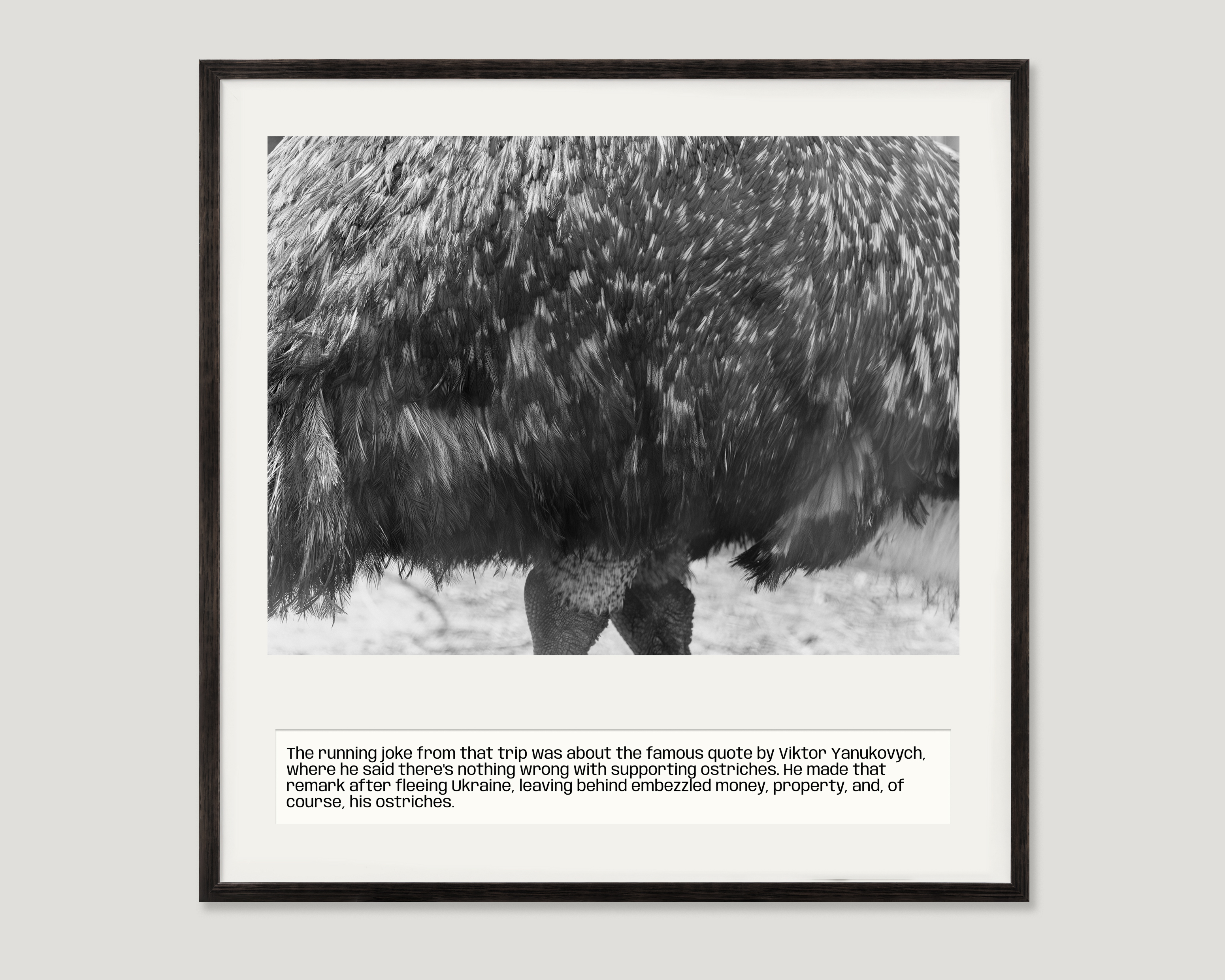
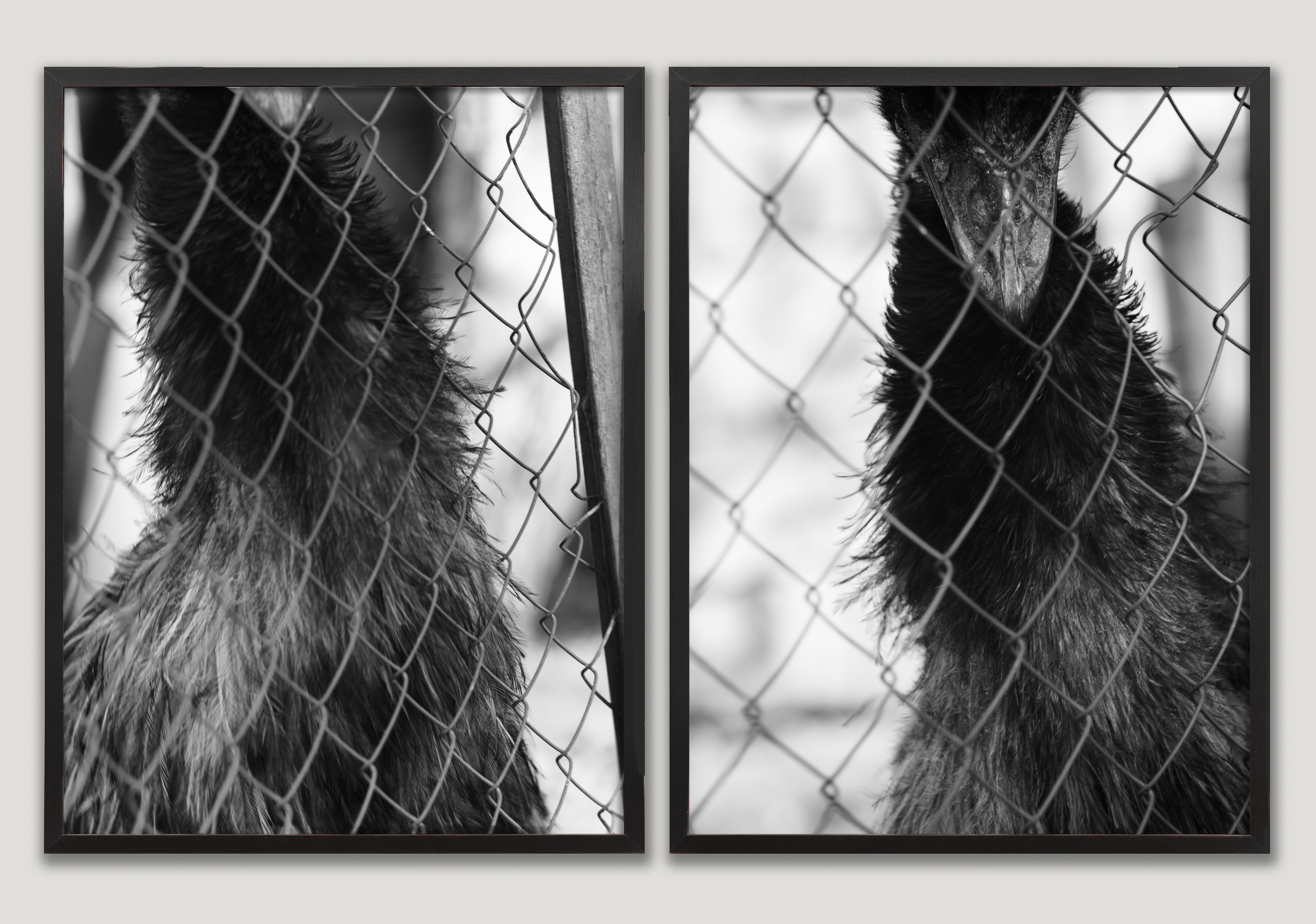
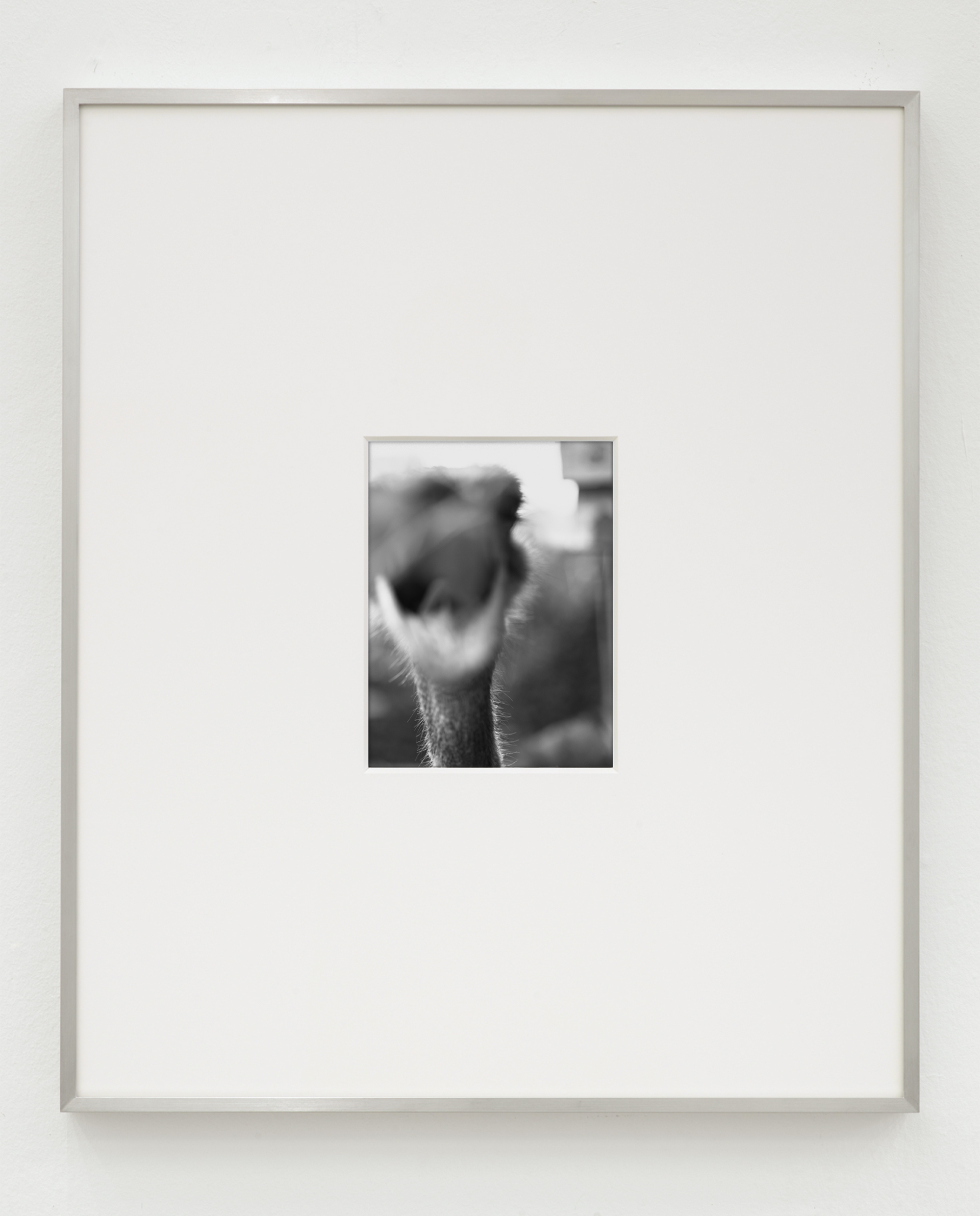
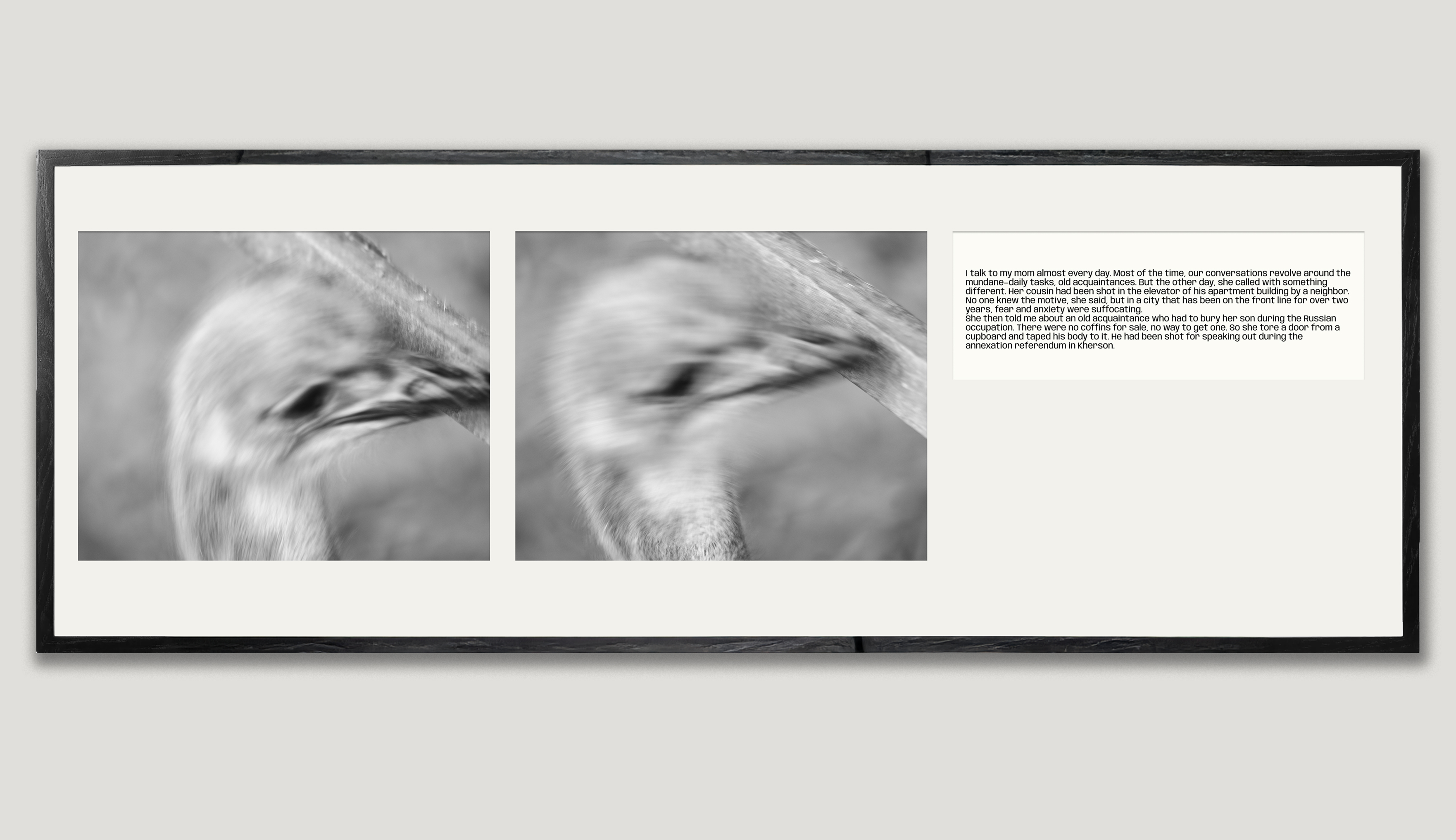
In the With Feathers project, photographs coexist with printed text, where the text functions as my diary of the Russian invasion of Ukraine, and the photographs of birds act as stand-ins for the narrator’s emotional state. The series began in Kyiv in 2022 as an attempt to find tenderness in images of decorative birds, but it evolved into its opposite: the horror of captivity, exile, and loneliness. At first, I wrote these texts as a Ukrainian artist who grew up in Russia and returned to her homeland, and I continue this project as a person trapped by bureaucracy in statelessness.
The work opens with reflections on the impossibility of continuing photographic practice as it existed before. It addresses the intense psychological pressure felt by both myself and those around me.
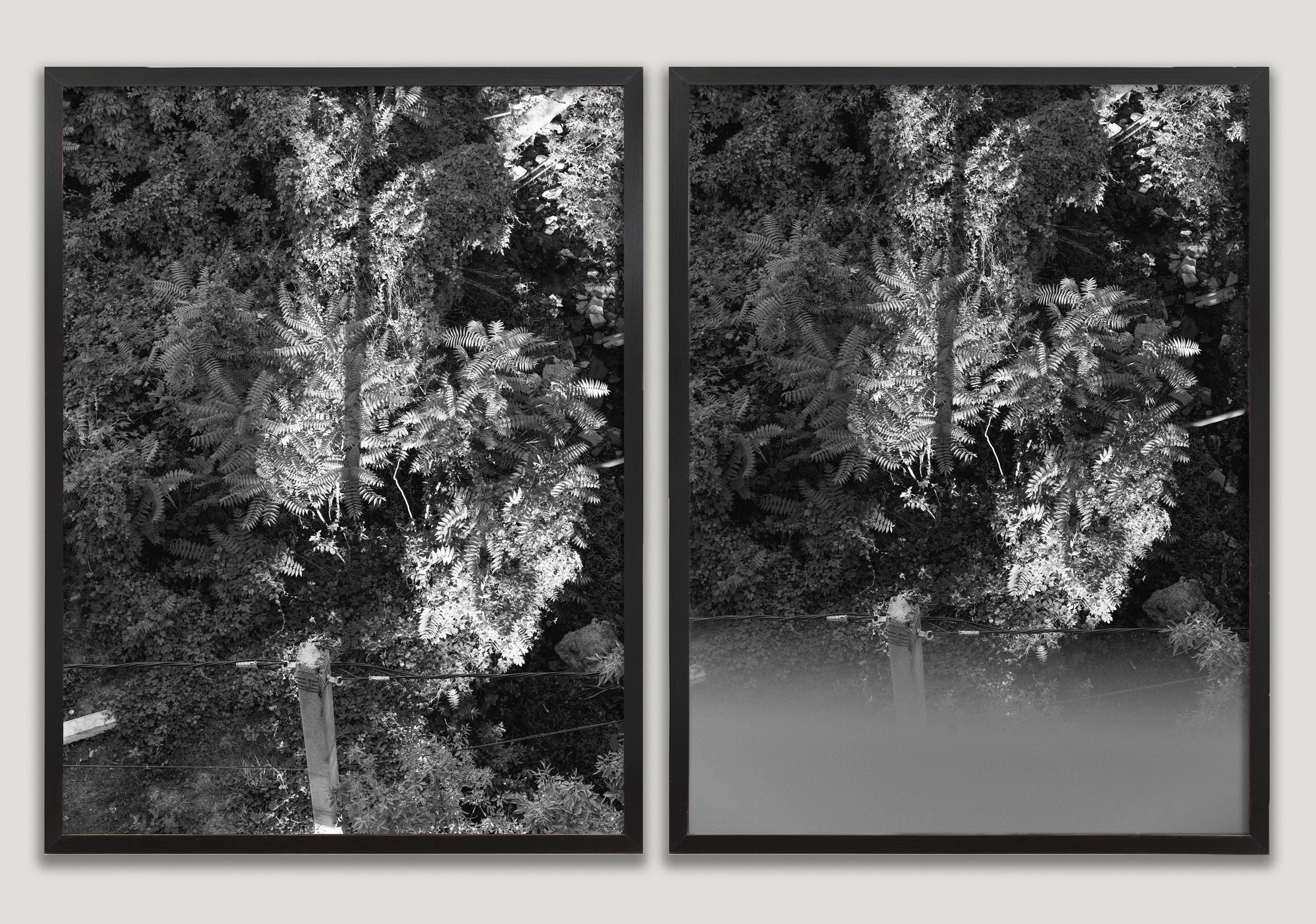
The world around the viewer unravels into the emotional oppression of war: I share the pain of isolation and the grief of losing family members on both sides of the border. Pictorially the project oscillates between photographs with and without text and a few centerpiece fragments that only have the text. These elements attest to the closed nature of the inner world of trauma.Two fragments of text without photographs take the form of lists: all the addresses I could remember living at, and the places where I celebrated my birthday. These text fragments exist as an imaginary set of vernacular photographs with these solitary visions emphasizing the emptiness that displacement left in my life. Finally the viewer is confronted with a cityscape photographed from above, with an awkward movement towards the edge of the fence: evidence of suicidal thoughts or the miraculous flight of a flightless bird that is about to happen.
The viewer is invited to stand outside the thin walls of the zoo and the world, where at any moment they could find themselves inside, behind bars. In the series With Feathers, the birds are shown in fruitless attempts to hide from the watchful gaze above. They are pressed by their isolation and their desire for closeness, demonstrating an unrelenting desire to live free despite their condition.


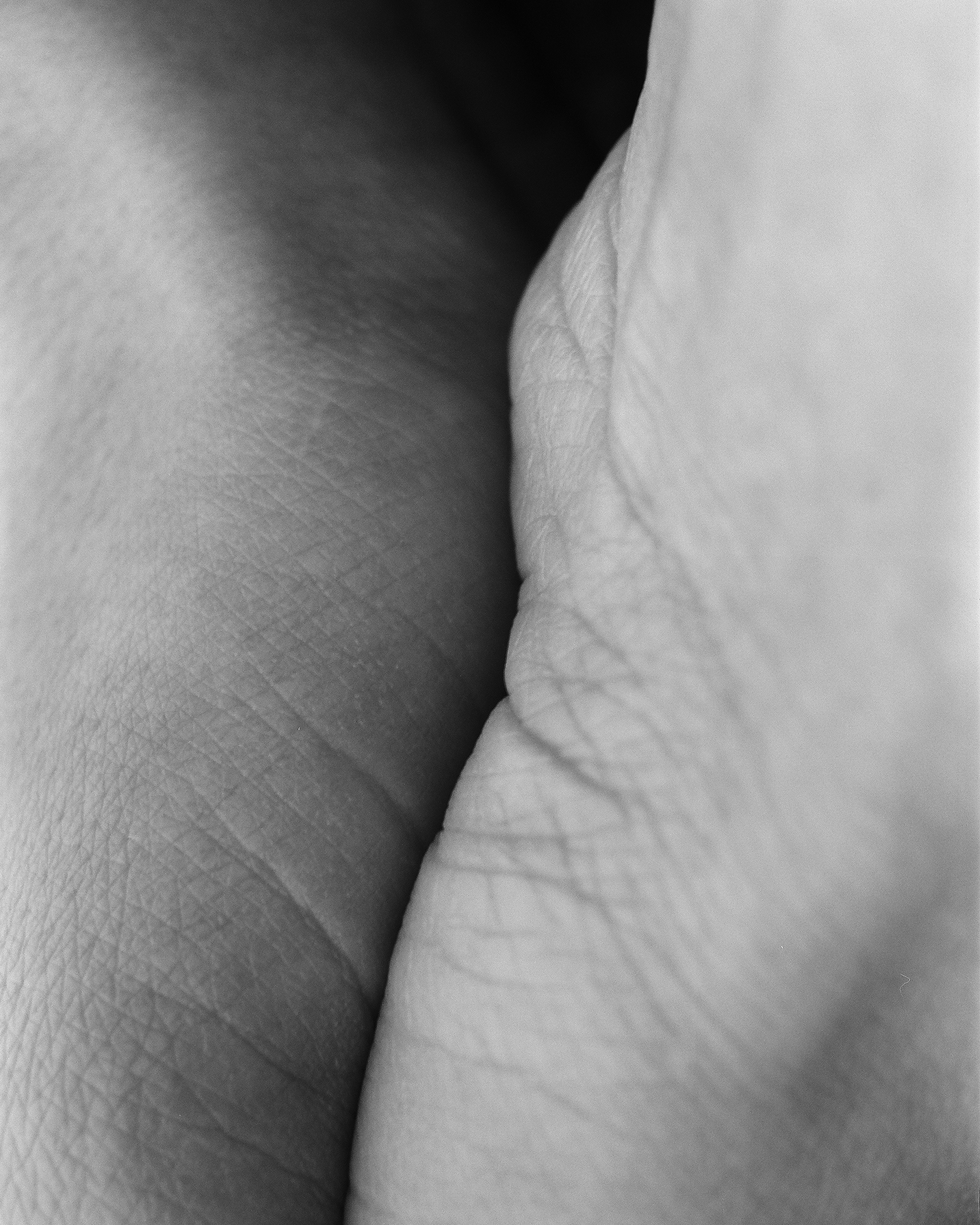


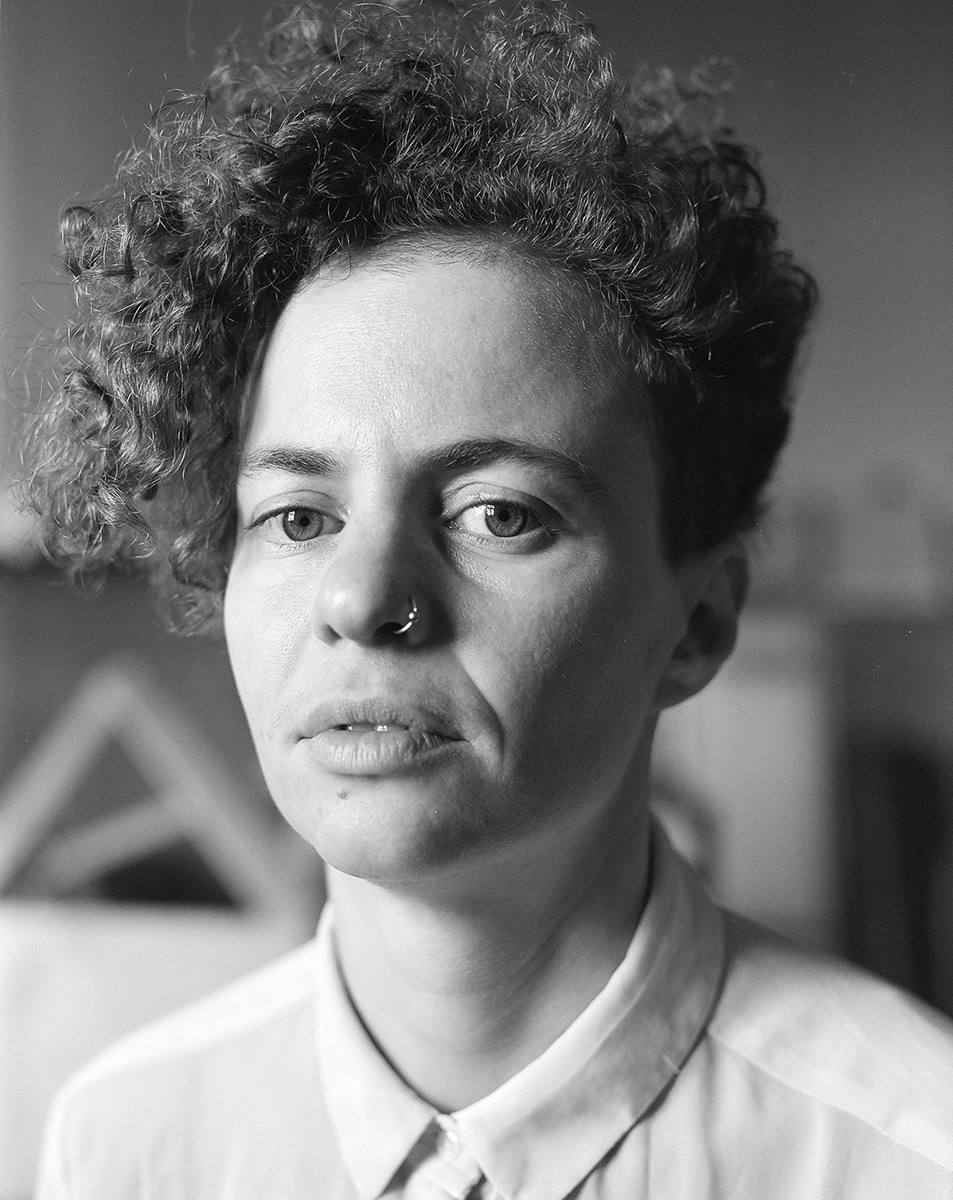
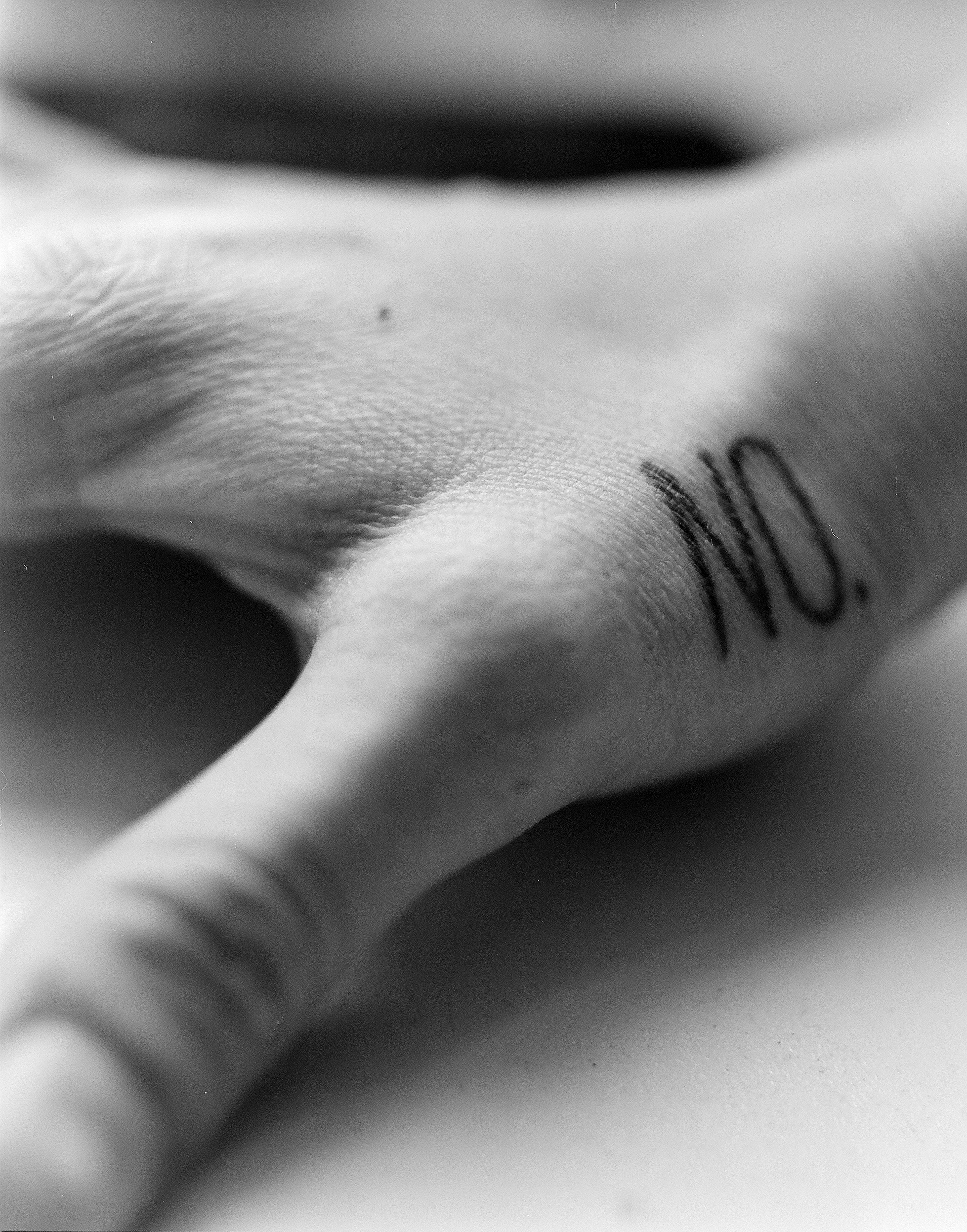
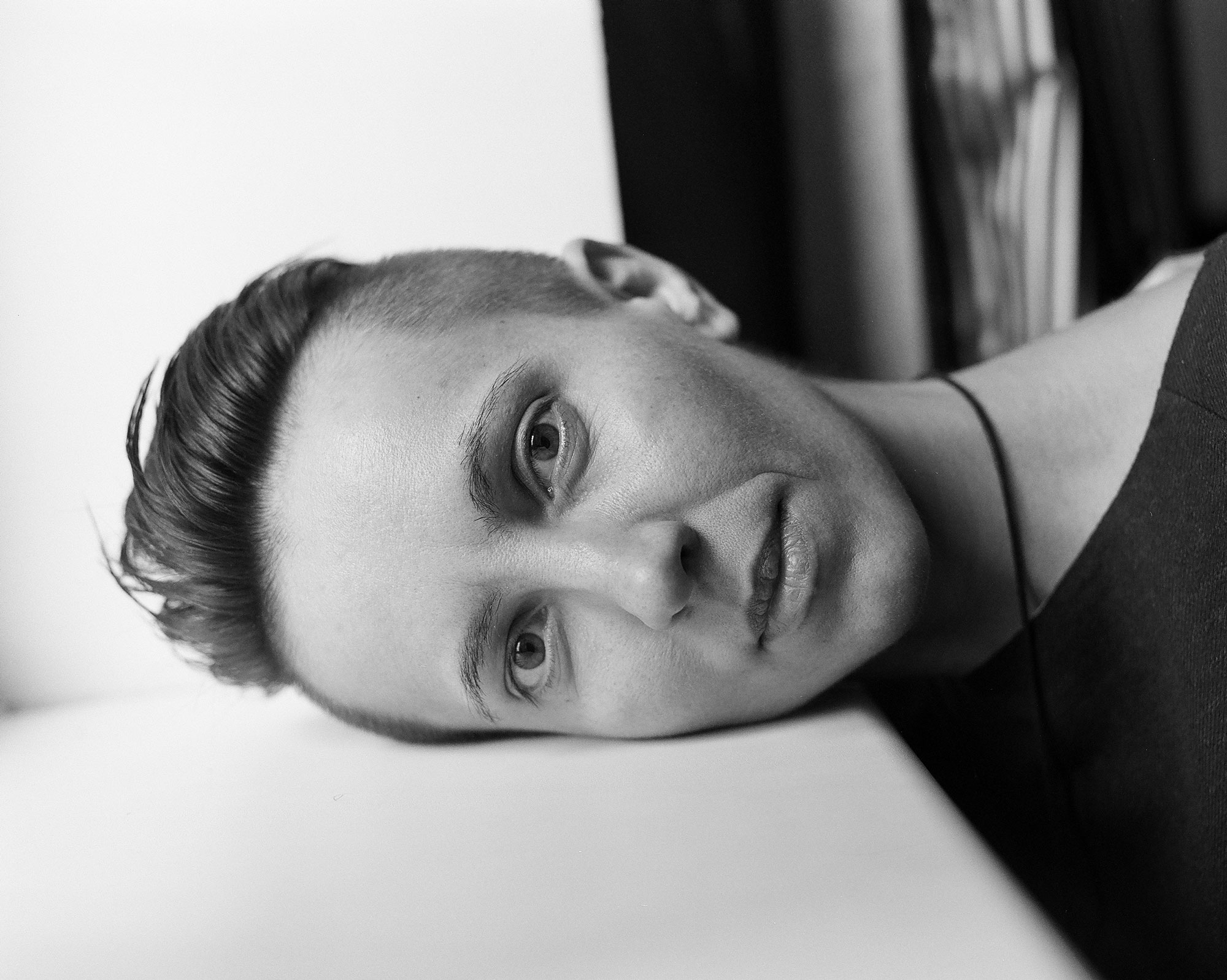


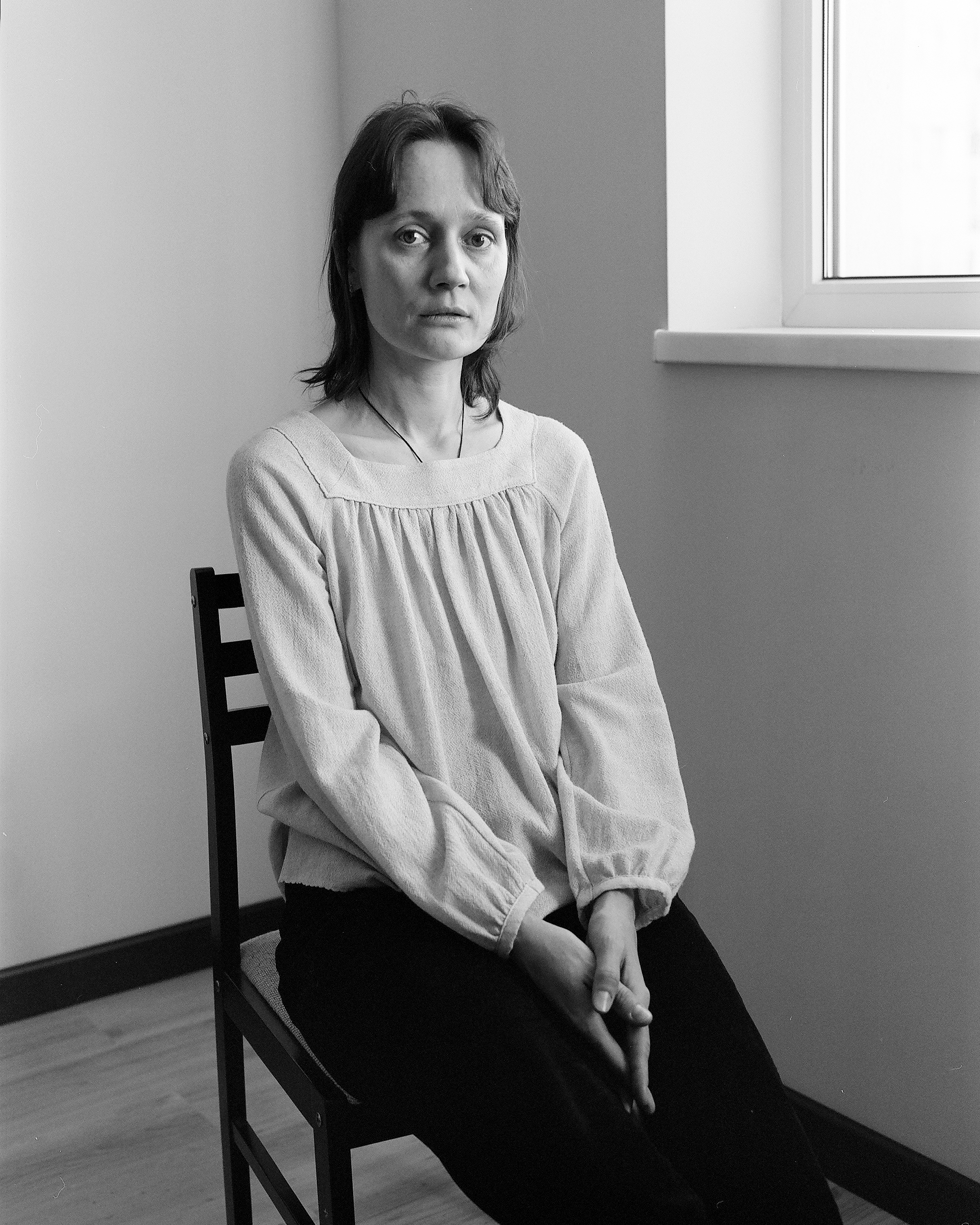
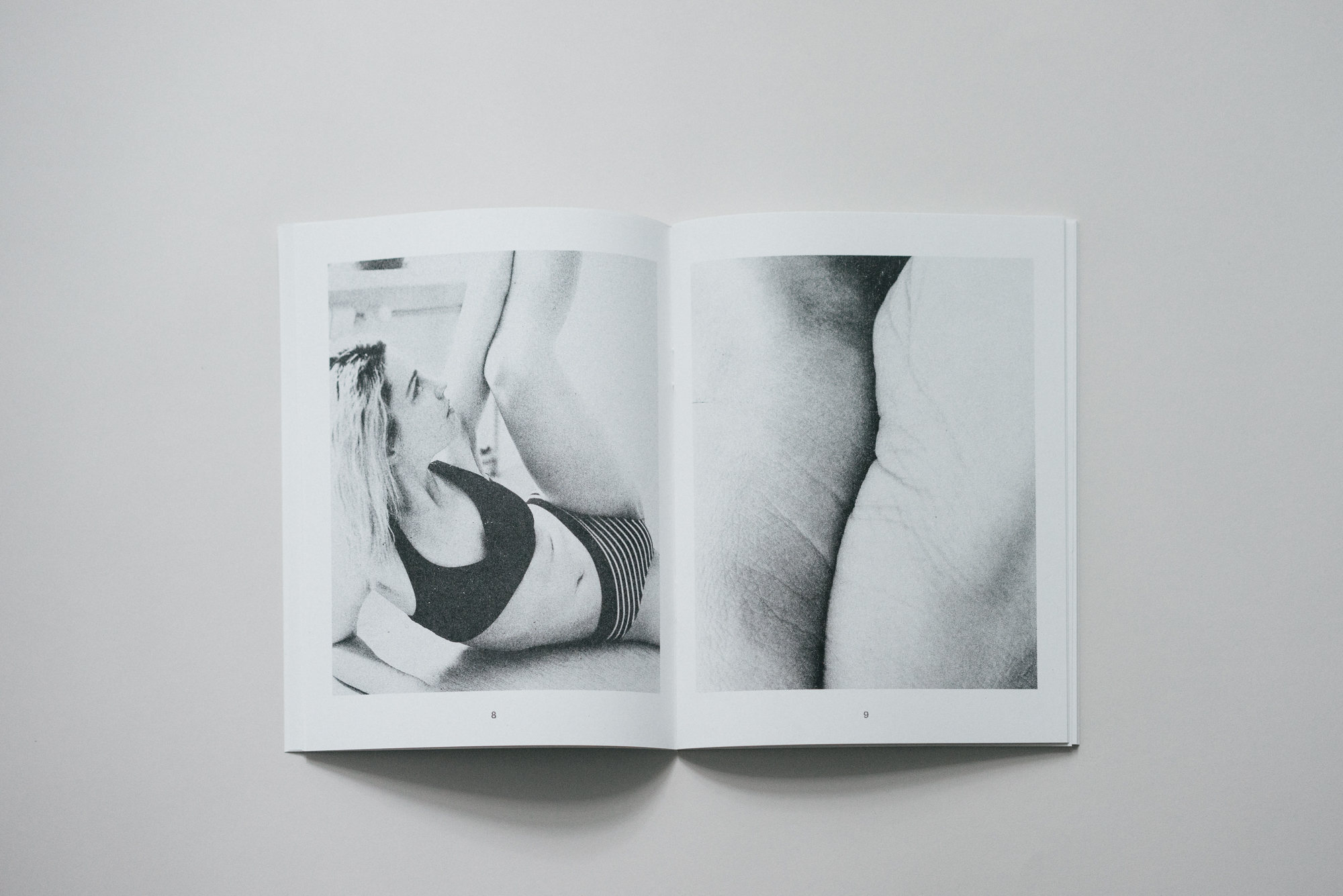
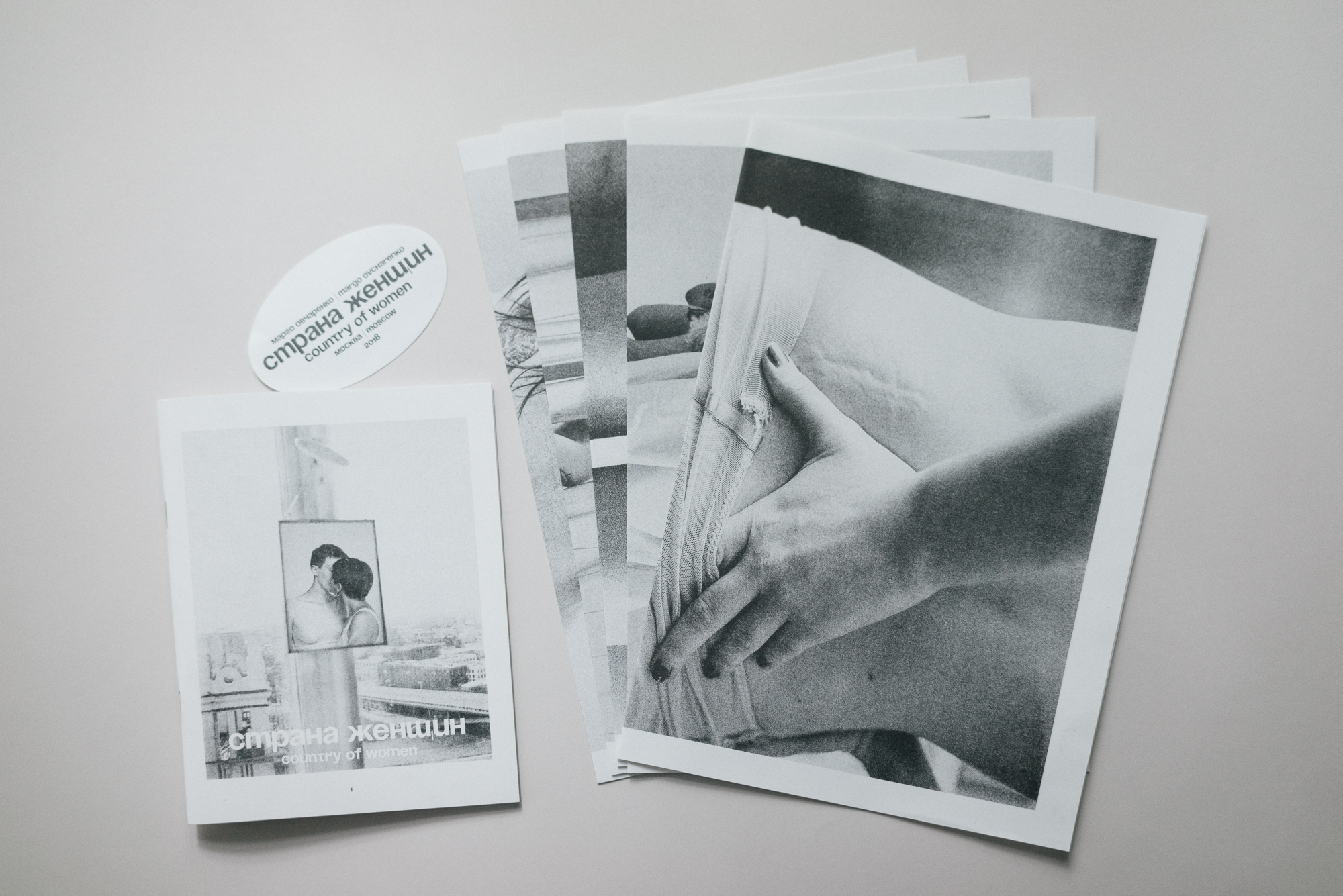
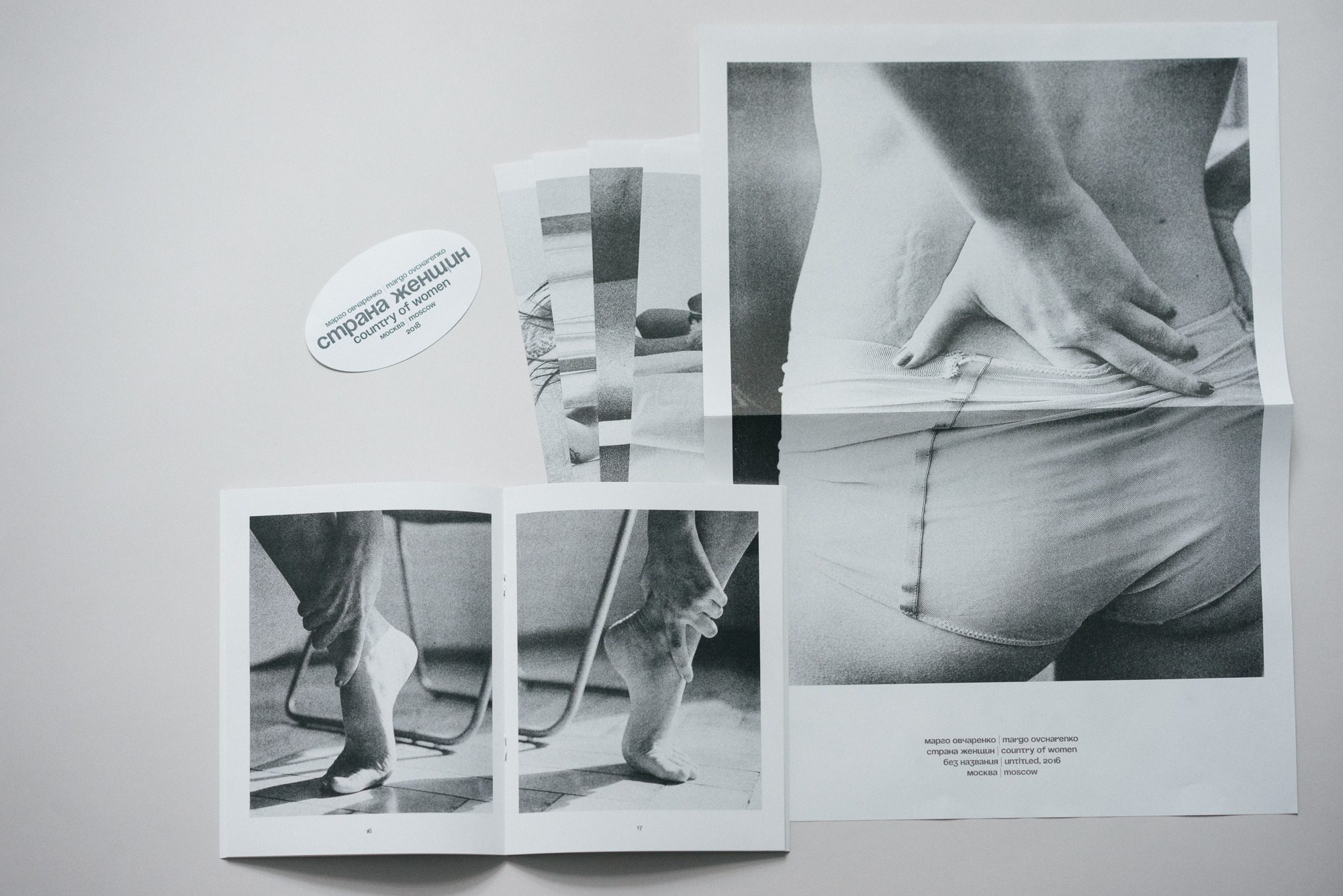
Country of Women, 2017
In Country of Women series she photographs queer women in the Eastern bloc. Margo has reached local LGBTQ+ media and communities by putting open calls for female identified queers and photographed whoever came forward in Russia, Ukraine and Belarus.
Margo addresses the lack of cultural memory available for queer women in post-soviet world. Having been overshadowed by heterosexual mainstream, queerness - and especially female one - in the former USSR, always remained a current event with no history, with little to no visual legacy. Margo approaches this issue with an attempt to bring what could be this legacy upon modern-day queer portrait. Her main tool is a subversion through posing, derivative of a soviet-era female body representation, with sport-related imaging being the most direct inspiration. The idea of physical tension under intangible circumstances - as in both competition and oppression - is a backbone for the whole series as well as some of Margo’s earlier works. Her childhood background in gymnastics first led to her project called Furious Like a Child, dealing with an issue of forced exposure of the female body in sports. This time she uses a somewhat reversed approach - inherently sexualized subject of queerness is shown through supposedly asexual posing and overall aesthetics reminiscent of Soviet-era propaganda. This way the visual identity of female queerness leans toward powerfulness, yet remains in the realm of attractiveness with the latter being a most potent device for female empowerment in Margo’s work.
Margo addresses the lack of cultural memory available for queer women in post-soviet world. Having been overshadowed by heterosexual mainstream, queerness - and especially female one - in the former USSR, always remained a current event with no history, with little to no visual legacy. Margo approaches this issue with an attempt to bring what could be this legacy upon modern-day queer portrait. Her main tool is a subversion through posing, derivative of a soviet-era female body representation, with sport-related imaging being the most direct inspiration. The idea of physical tension under intangible circumstances - as in both competition and oppression - is a backbone for the whole series as well as some of Margo’s earlier works. Her childhood background in gymnastics first led to her project called Furious Like a Child, dealing with an issue of forced exposure of the female body in sports. This time she uses a somewhat reversed approach - inherently sexualized subject of queerness is shown through supposedly asexual posing and overall aesthetics reminiscent of Soviet-era propaganda. This way the visual identity of female queerness leans toward powerfulness, yet remains in the realm of attractiveness with the latter being a most potent device for female empowerment in Margo’s work.
Publications 2018-2026
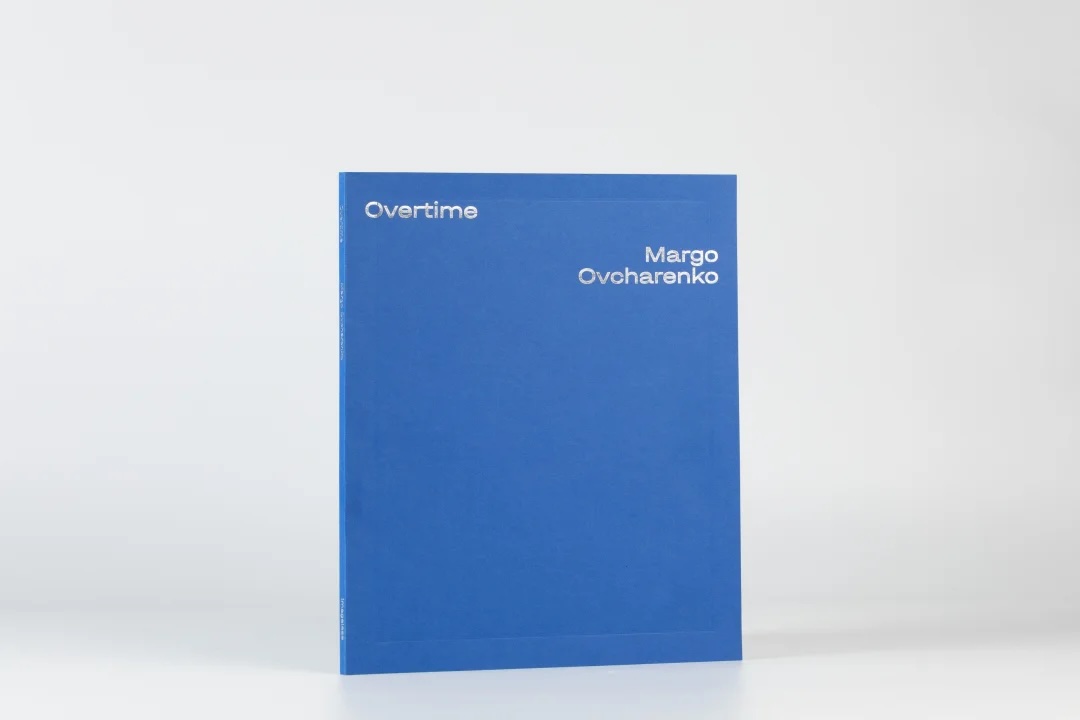
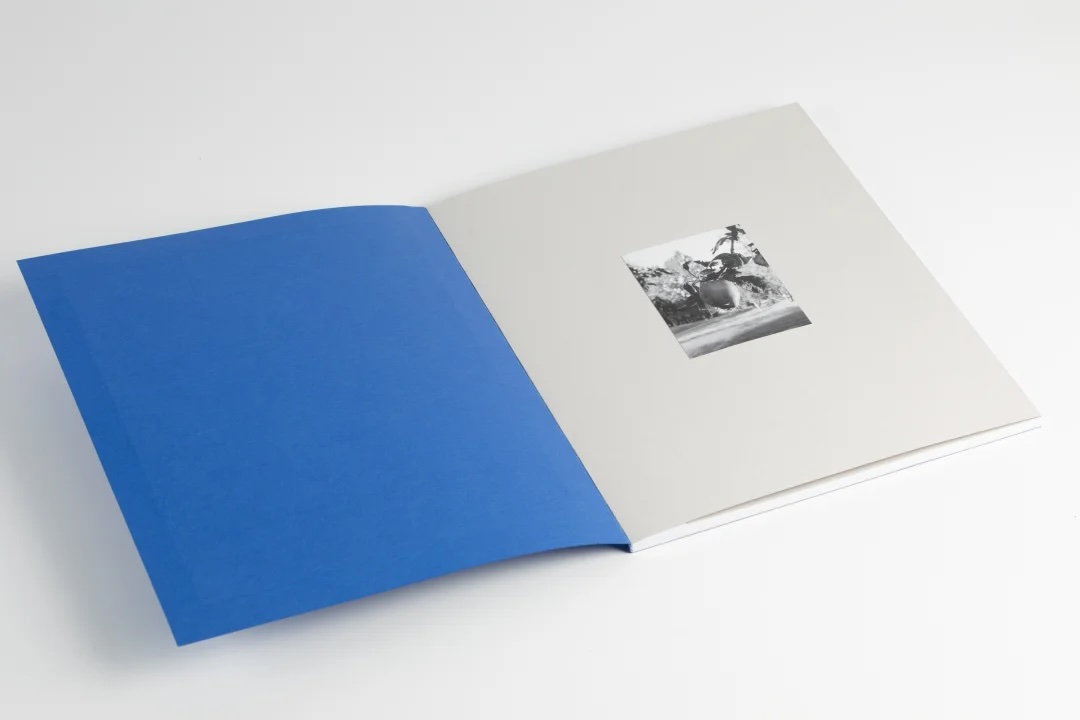
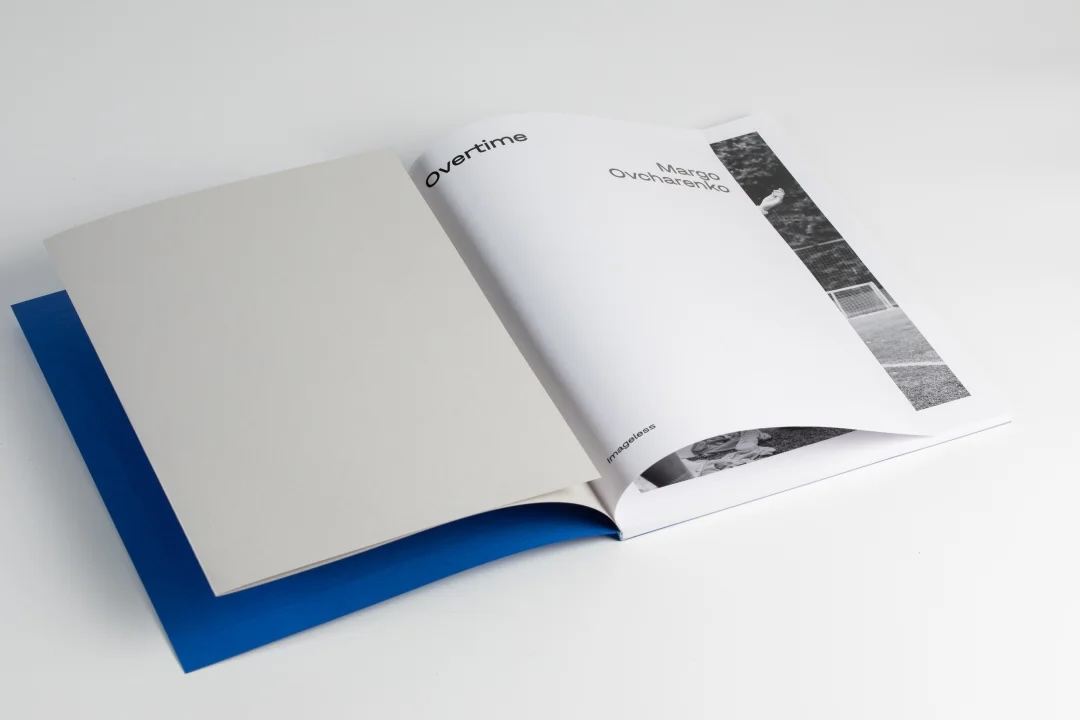
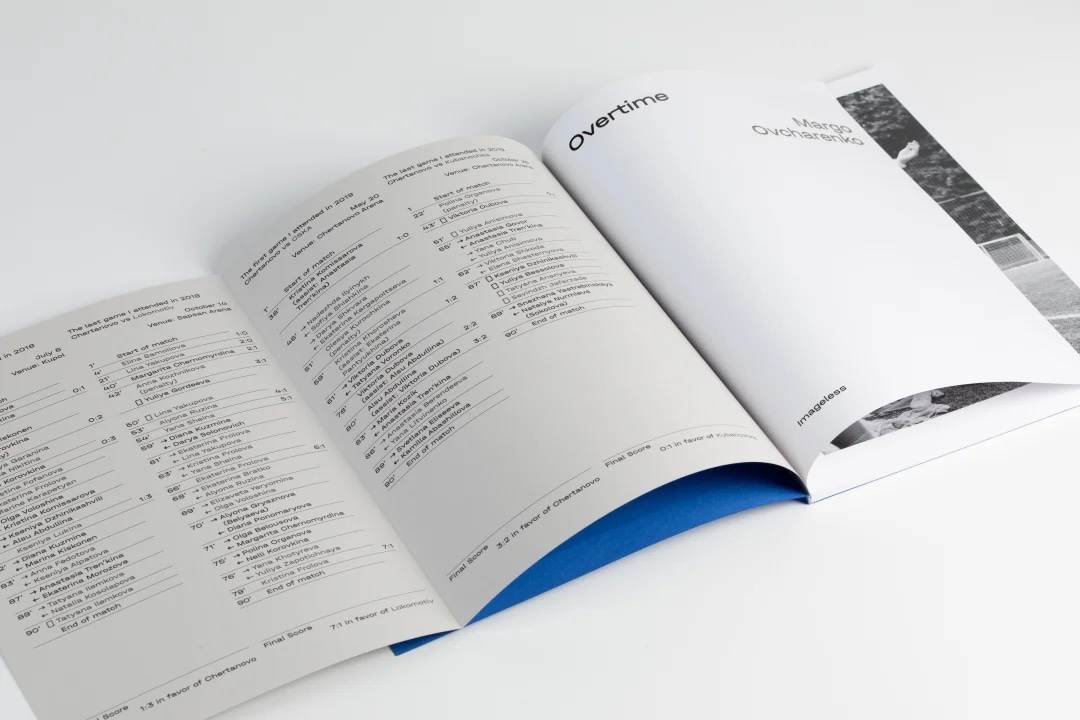
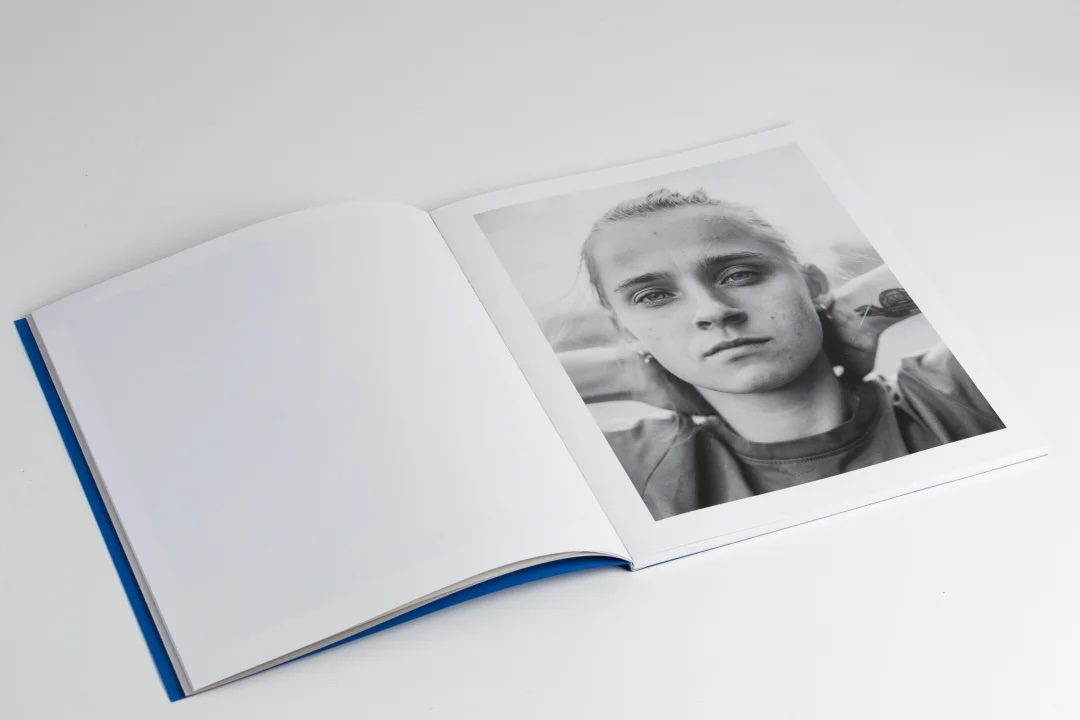
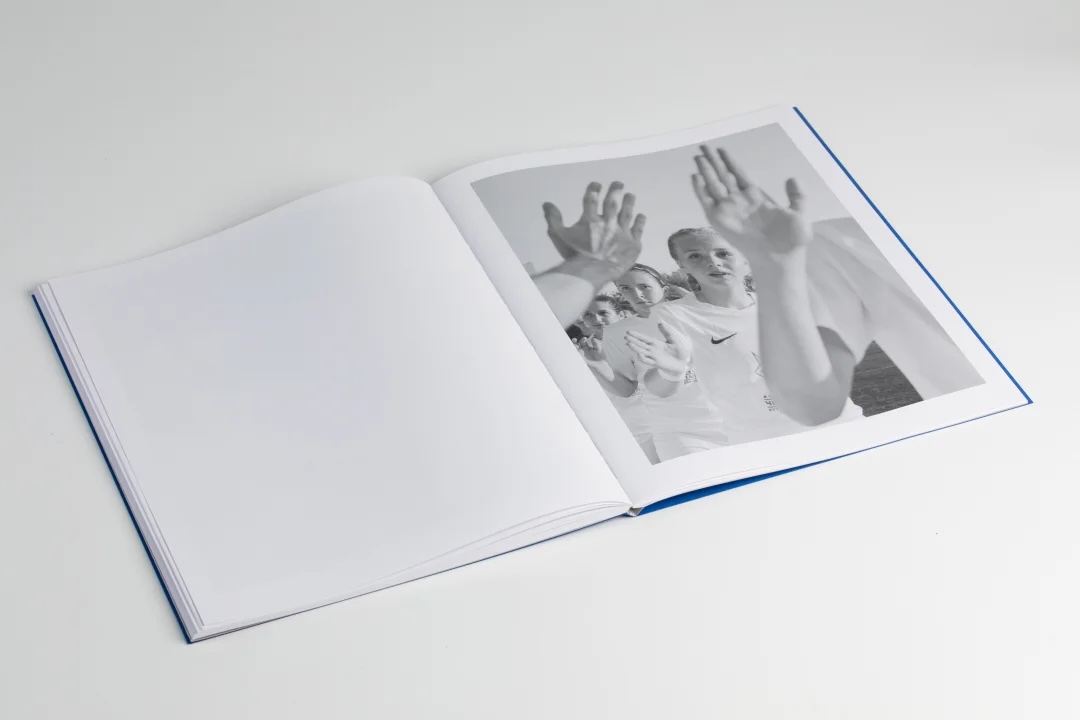
Overtime is a photobook about a football boarding school and its professional women’s team on Moscow’s outskirts. Over four years, it follows queer teenagers coming of age amid discipline, belonging, and visibility.
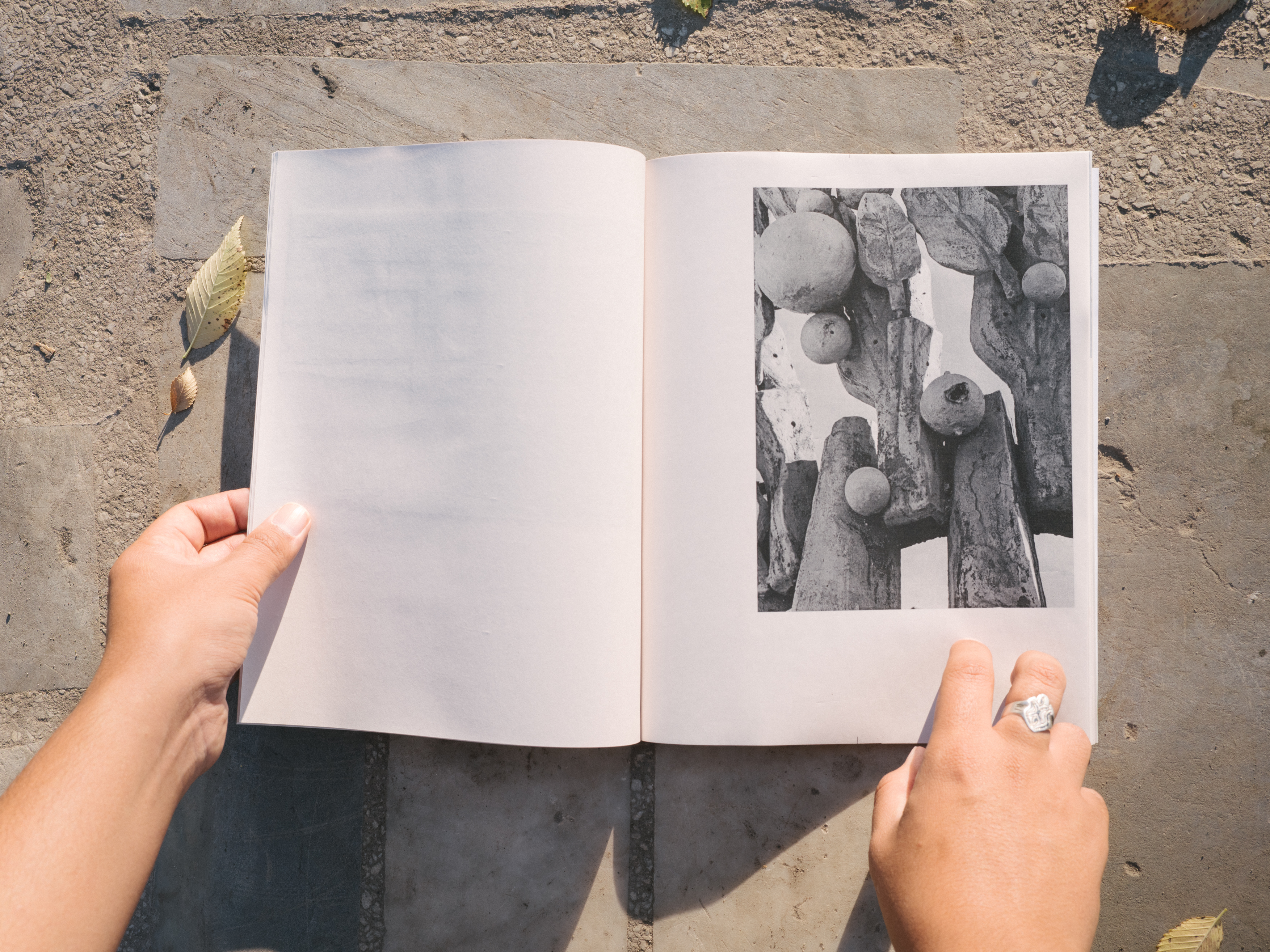
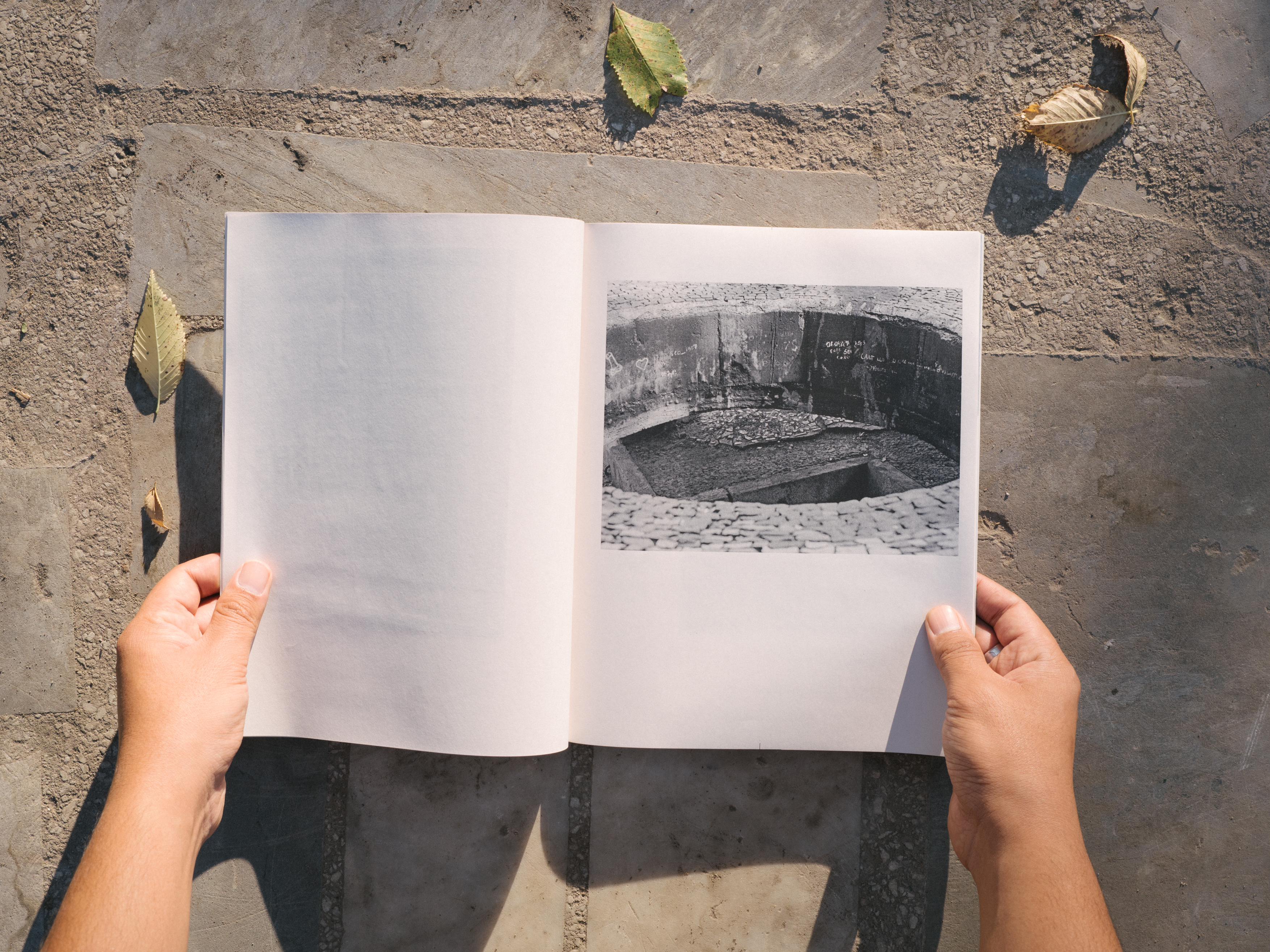
The ebb is a self-published book printed In Chisinau, Moldova in 2022. It was produced during a Re-public of cultural workers artist in residency program where Margo collobarated with Temirtas Iskakov. This publication is made possible thanks to 3rd studio space at Muzeul Zemstvei and Oberliht association.
Temirtas Iskakov is an architect and cultural activist from Astana, Kazakhstan. He is the founder of Fading. TSE urban research platform built around the topics of architectural heritage and collective memory. Temirtas explores urban history, material culture, visual identity of Kazakhstani cities and focuses on community building through visual storytelling, social media documentary and advocacy campaigns.


Country of women is a riso-printed zine , edition of 100. It was produced in Moscow in 2018 and its production was supported by Empty Stretch zine’s grant, a publishing initiative based in the U.S. This zine was shortlisted by Aperture in its First Photobook award.